Replacing a furnace in New Jersey typically costs 3,500 to 8,500, with standard professional installations falling in the 5,500 to 7,500 range. Costs vary by equipment efficiency, fuel type, and installation complexity. In Northern NJ — particularly Newton and Sussex County — labor rates run 15–25% higher than the southern part of the state. This guide breaks down the cost factors, how to size your furnace, the rebates and tax credits that lower your price, and how to decide between repair and replacement.
Furnace Replacement Price Ranges by Fuel Type
- Gas furnaces: typically 4,000–8,500 — the most popular NJ option for efficiency and lower fuel bills.
- Electric furnaces: typically 3,500–6,500 — lower upfront cost, but higher monthly operating expense given NJ electricity prices.
- Oil furnaces: typically 6,000–9,500 — common in older, rural Northern NJ homes; require storage tanks and specialized venting.
Regional Cost Differences
| Region | Equipment Cost | Labor & Permit Fees | Average Total |
|---|---|---|---|
| Northern NJ (Sussex, Newton, Bergen) | 2,500–6,000 | 2,000–4,000 | 4,500–10,000 |
| Central NJ (Middlesex, Monmouth) | 2,200–5,500 | 1,800–3,500 | 4,000–9,000 |
| Southern NJ (Camden, Atlantic) | 2,000–5,000 | 1,500–2,500 | 3,500–7,500 |
Is a $12,000 Quote Reasonable?
Higher than the state average, but a $12,000+ quote can be justified by ultra-high-efficiency modulating condensing furnaces (95–98% AFUE), multi-zone damper/smart-thermostat systems, structural duct resizing, or complex PVC venting upgrades where chimney venting is no longer viable.
Choosing the Right Size & Efficiency
80% vs. 95%+ AFUE
AFUE measures how much fuel becomes usable heat — an 80% furnace loses 20% up the flue; a 95% furnace loses only 5%. Standard models use a single heat exchanger and metal flue; high-efficiency condensing models add a secondary heat exchanger and vent through PVC. (See the federal ENERGY STAR furnace standards.)
| Feature | Standard (80% AFUE) | High-Efficiency (95%+ AFUE) |
|---|---|---|
| Equipment Cost | 4,500–7,200 | 7,500–11,500 |
| Combustion | Single heat exchanger | Condensing, dual exchangers |
| Venting | Metal flue / chimney | PVC through sidewall |
| Operating Cost | Higher monthly bills | Up to 15–20% lower |
| Annual Savings | Baseline | 150–350+ per year |
Sizing (BTU Requirements)
Northern NJ homes need roughly 40–50 BTU per square foot. Insulation, window age, and layout push you to the high or low end:
| Home Size | Heating Requirement | Typical Furnace Capacity |
|---|---|---|
| 1,000 sq ft | 40,000–50,000 BTU | 40,000–60,000 BTU |
| 1,500 sq ft | 60,000–75,000 BTU | 60,000–80,000 BTU |
| 2,000 sq ft | 80,000–100,000 BTU | 80,000–100,000 BTU |
| 2,500 sq ft | 100,000–125,000 BTU | 100,000–120,000 BTU |
| 3,000+ sq ft | 120,000+ BTU | 120,000+ BTU |
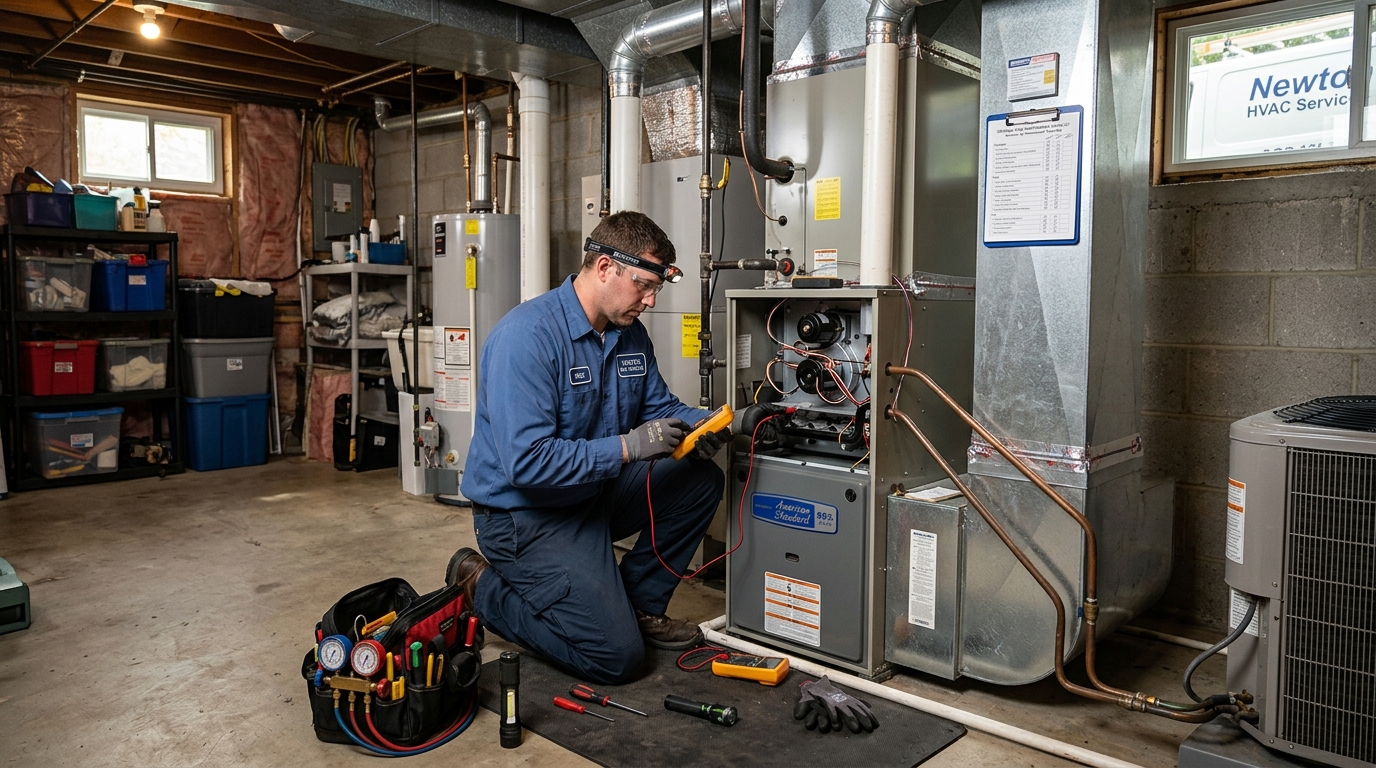
An accurate size requires a professional load calculation — undersized units run constantly, oversized units short-cycle. Our certified team handles furnace installation and repair with proper sizing.
Payback & Reliable Brands
Choosing a 95%+ AFUE furnace over an 80% model adds a 3,000–4,300 premium but saves 150–350+/year, for a typical 8–14-year payback on equipment that lasts 15–20 years — pure net savings after that, especially with tax credits and rebates. Reliable brands for our climate: Carrier (precise, quiet), Trane (rugged durability), Lennox (top AFUE ratings), and Goodman (value with strong warranties).
Fuel Conversions & Heat Pump Alternatives
Oil-to-Gas Conversion
Converting from oil to gas adds 2,000–6,000 in transition costs beyond the furnace itself:
| Step | Description | Estimated Cost |
|---|---|---|
| Utility gas line connection | Running service from the main to your meter (PSE&G or Elizabethtown Gas) | 1,000–3,000 |
| Oil tank decommissioning | Removing an underground/basement tank + soil testing | 1,500–4,500+ |
| Chimney relining | Code-compliant liner to vent gas safely | 1,200–2,500 |
| Venting modifications | PVC intake/exhaust for high-efficiency models | 500–1,200 |
| Interior gas piping | Connecting the meter to the new equipment | 800–2,000 |
Furnace vs. Heat Pump
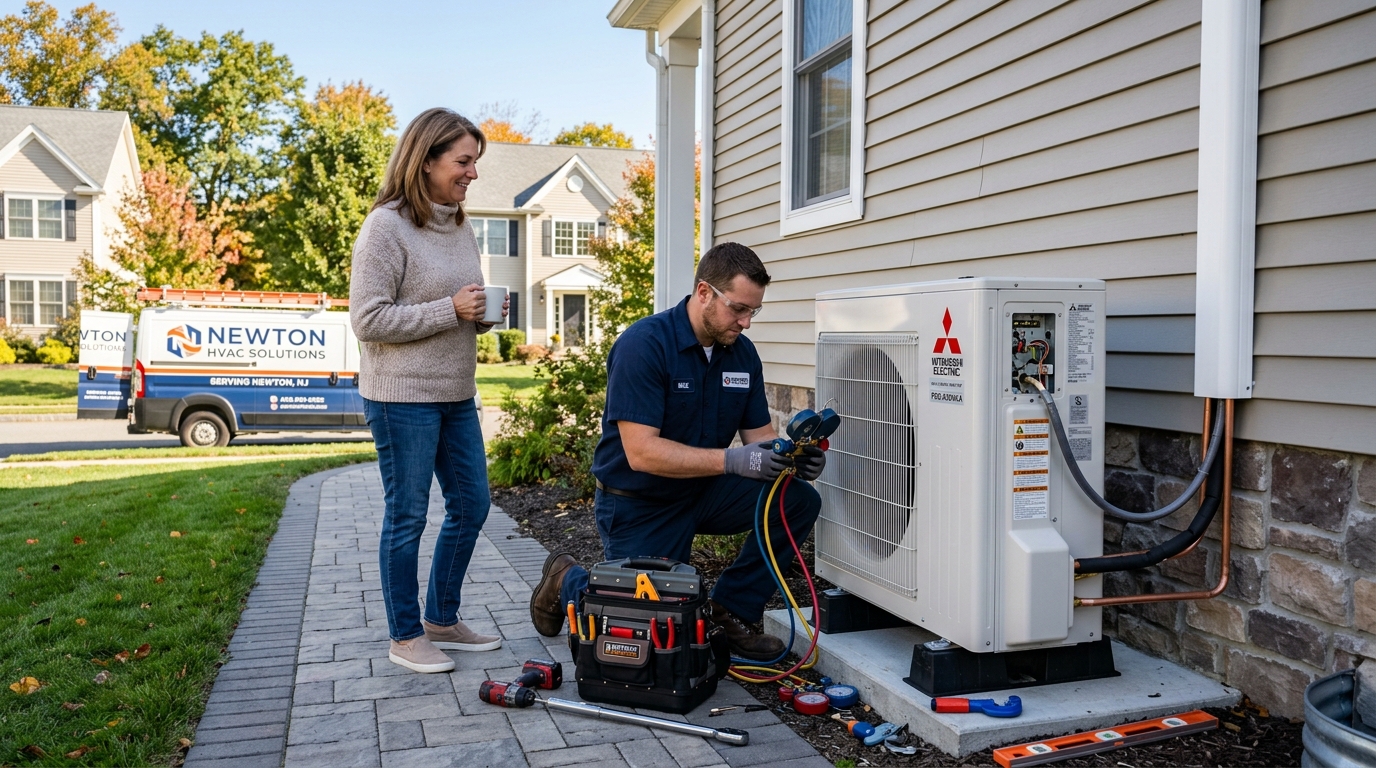
Central furnaces deliver robust 120–140°F heat even in sub-zero cold, cost less upfront, and recover temperature fast — but rely on fossil fuel, need careful venting/CO monitoring, and don’t cool. Electric heat pumps heat and cool in one unit and run at 300%+ efficiency in mild weather — but standard models lose efficiency below 32°F, deliver cooler ~95°F register air, and cost more upfront. For Northern NJ (Sussex, Morris, Warren), a dual-fuel hybrid — heat pump + high-efficiency furnace — is the optimal compromise: the heat pump handles mild weather efficiently and the furnace takes over below the ~30–35°F balance point.
New Jersey Rebates, Tax Credits & Utility Incentives
Stacking incentives can shave thousands off your cost:
- Federal 25C tax credit — 30% of a qualifying high-efficiency gas furnace, capped at $2,000/year.
- State rebates — through the New Jersey Clean Energy Program.
- Utility programs: Elizabethtown Gas — up to 900 rebate + 0% APR on-bill financing; PSE&G — up to 6,000 for whole-home upgrades with interest-free on-bill repayment; JCP&L — up to 1,000 on heat pumps/electric HVAC/smart thermostats + 0% APR financing from 2,500–$25,000.
⚠️ Note: Rebate amounts and requirements fluctuate with state and federal budgets, and most rebates require professional installation by a licensed, participating contractor. We handle the permitting, installation, and rebate paperwork for you.
The “$5,000 Rule”: Repair vs. Replace
Multiply your furnace’s age (years) × estimated repair cost (). Over 5,000 → replace; under → repair. Example: a 6-year-old furnace needing a 400 repair = 2,400 (repair). A 12-year-old furnace needing a 600 blower motor = 7,200 (replace). Beyond the math, weigh three factors:
- Age: under 10 years usually repair; 10–15 is the transition zone; over 15 means even small repairs warrant critical evaluation.
- Breakdown frequency: two or more calls in two seasons signals systemic decline — and replacement secures a fresh 10-year parts warranty.
- Safety: a cracked heat exchanger can leak deadly carbon monoxide and cannot be safely patched — an automatic replacement trigger on an out-of-warranty unit. If you suspect an unsafe condition, contact Constant Air Service for a precise diagnostic.
Installation Logistics
A professional furnace replacement takes 4–8 hours: site prep and old-system removal (hrs 1–2), positioning and leveling (hrs 2–3), venting and utility hookups with gas-leak testing (hrs 3–5), then testing, calibration, and cleanup (hrs 5–8). Codes require at least 30 inches of clear working space in front and ~1 inch on the sides/back.
Bundling Furnace + AC
If your AC is over 10–12 years old, replacing both together is economical — a bundled changeout runs 9,000–15,000 but saves 1,000–2,000 in labor, ensures matched SEER2 performance, and means a single permit and inspection.
Ductwork for High-Efficiency Upgrades
Condensing furnaces (90%+ AFUE) produce cool, acidic flue gases that must be actively vented through PVC out a sidewall — they cannot use an old masonry chimney (moisture would deteriorate the brick), and a shared water heater may be left “orphaned,” needing a new liner or a power-vent unit. High-efficiency units also use sensitive variable-speed ECM blowers, so a ductwork evaluation (static-pressure testing, sizing, and leak inspection) is critical before installation.
Permits & Code Compliance
In New Jersey, a legal HVAC replacement requires building and electrical permits from your municipality. Skipping them risks home-sale complications (CO inspections flag unpermitted equipment), voided homeowners insurance on a future claim, and safety violations. A licensed contractor handles the drawings, paperwork, and inspections for you.
Protecting Your Investment with Maintenance
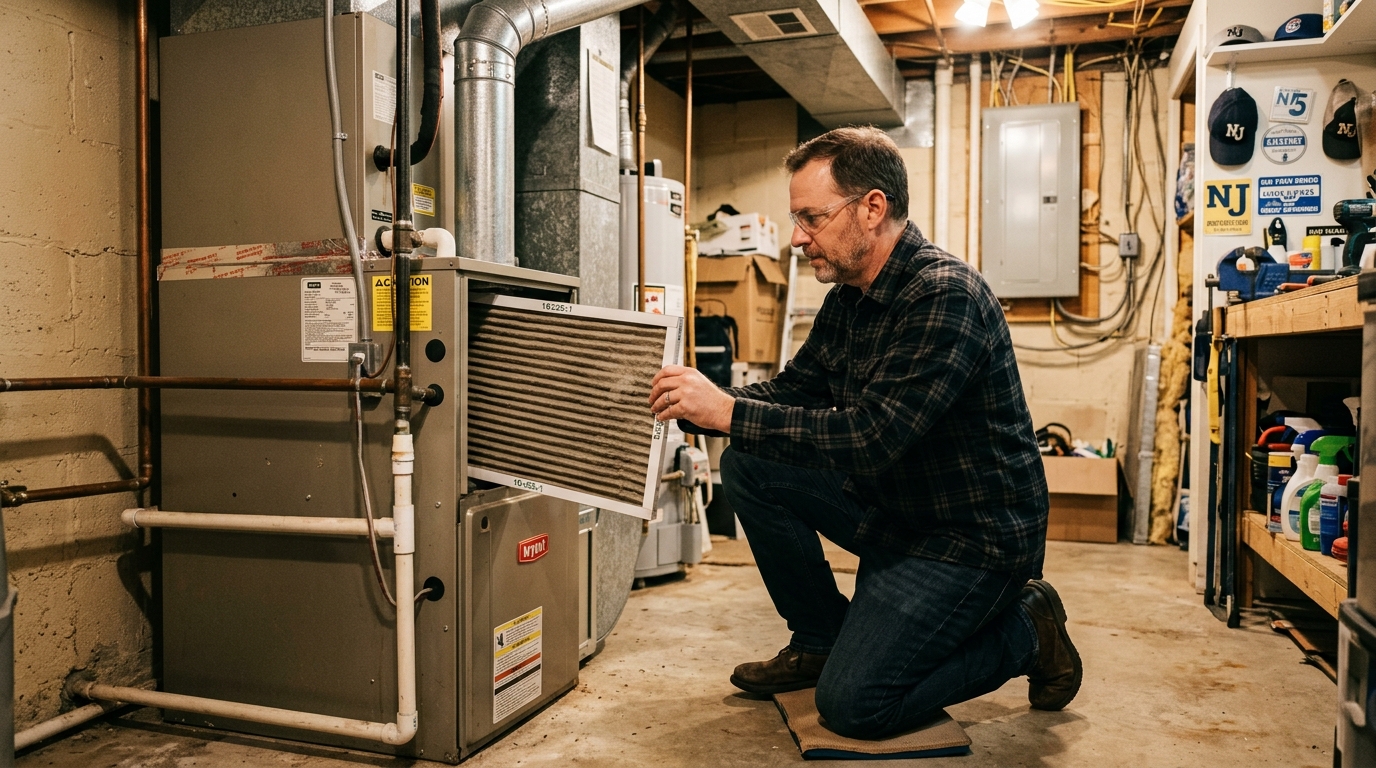
Check the filter monthly (replace every 30–90 days), keep vents clear, calibrate your thermostat, and keep high-efficiency PVC exhaust pipes free of snow and debris. Crucially, manufacturers (Carrier, Trane, Lennox, Rheem) void warranties without proof of annual professional maintenance — so a documented yearly furnace tune-up protects you from high out-of-pocket repair costs and keeps efficiency high.
FAQs
How long does a new gas furnace last in New Jersey?
On average, 15–20 years — heavily dependent on regular professional maintenance, proper sizing, and prompt minor repairs. In demanding Sussex County winters, annual safety inspections and consistent filter changes maximize lifespan.
Can I legally install a furnace myself in NJ?
No. State regulations and local codes require installation by a licensed Master HVACR contractor. DIY risks voiding the warranty and compromising safety.
What’s the best time of year to install a furnace in Northern NJ?
The shoulder seasons — March–May or September–October. Lower contractor demand means more flexible scheduling and better rates, and you’re never left without heat when severe weather arrives.
Does a high-efficiency condensing furnace eliminate the need for a chimney?
Generally yes — condensing furnaces vent through PVC instead of a masonry chimney. The old chimney may still need sealing or abandonment per local code, and a shared water heater may need a new liner.
Ready to Upgrade Your Heating System?
For transparent pricing, maximum rebate savings, and flawless installation, contact our expert local HVAC team in Newton for a custom estimate. We provide the highest-quality heating and furnace services — keeping your home warm, safe, and energy-efficient all winter. Call (973) 948-0680.
If an older unit is still repairable, start with this furnace repair troubleshooting guide for Sussex County NJ before comparing replacement options.
Constant Air Service handles this for homeowners across Newton and Sussex County — licensed, family-owned since 1999, and available 24/7. Explore the related services:
Call (973) 948-0680