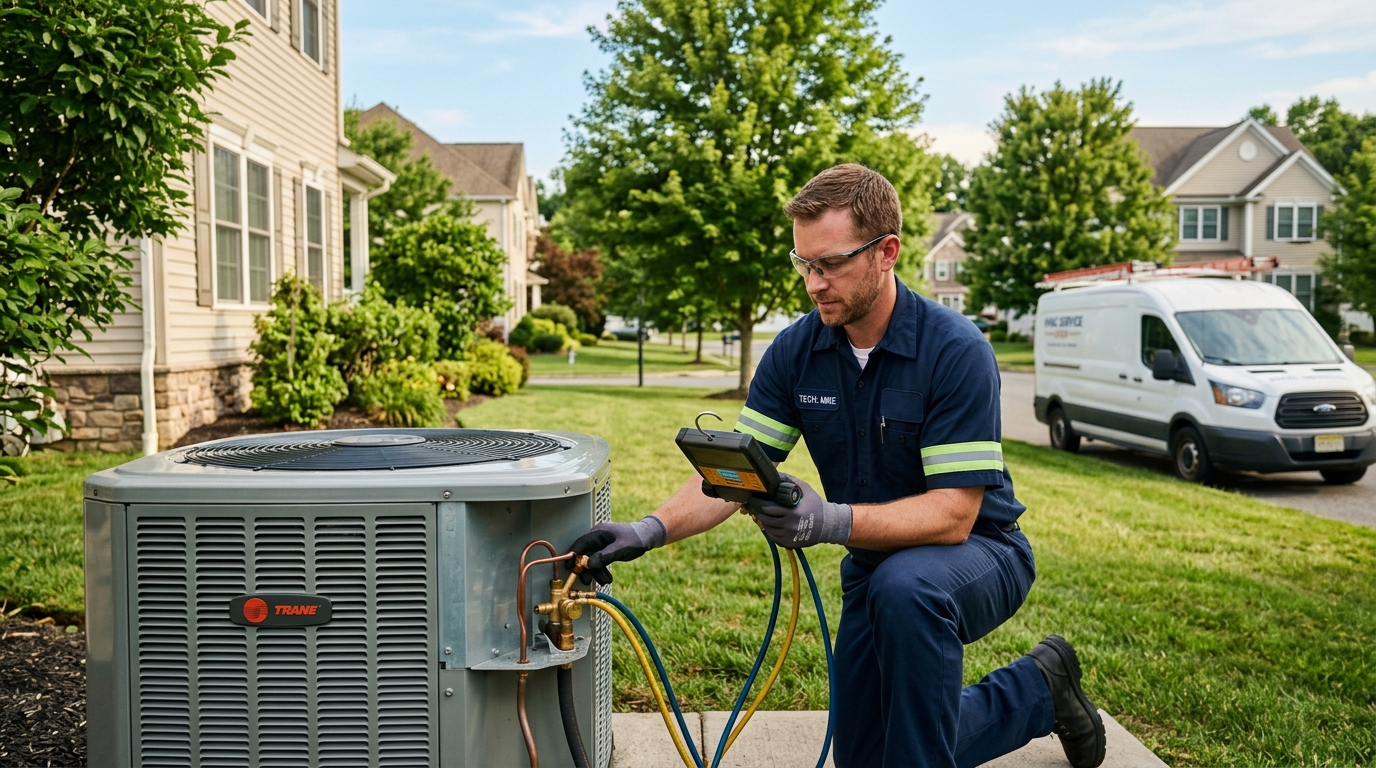
If your AC stops cooling during a Newton or Sussex County heat wave, the first move is to protect comfort and rule out simple causes. Emergency AC repair in Newton NJ is usually needed when the system runs but will not cool, freezes up, trips the breaker again, leaks water near finished areas, or leaves vulnerable family members without safe indoor temperatures.
This guide gives homeowners a safe triage path: what to check, what to shut off, when to call, and how to prevent a repeat breakdown. It is written for local homes in Newton, Sparta, Andover, Lafayette, Hampton Township, and nearby Sussex County communities where older ductwork, humidity, pollen, and long cooling cycles can push AC systems hard.
When is emergency AC repair needed in Newton NJ?
Emergency AC repair is needed when the system cannot maintain a safe indoor temperature, keeps shutting down, shows signs of electrical trouble, or risks water damage. A warm house is uncomfortable, but a warm house with a burning smell, repeated breaker trips, ice on the refrigerant line, or water around ceilings and floors should be treated as urgent.
Call for emergency HVAC repair in Newton NJ if any of these are happening:
- The thermostat is set to cool, but the vents blow warm or room-temperature air.
- The outdoor unit hums, buzzes, or clicks without starting.
- The breaker trips more than once after being reset.
- Ice appears on the copper refrigerant line, indoor coil cabinet, or outdoor unit.
- Water is leaking near the air handler, ceiling, finished basement, or utility closet.
- The home has infants, elderly family members, medical concerns, or pets at risk from heat.
If the issue is less severe, such as weak airflow or uneven cooling, you may still need AC service soon. But repeated electrical symptoms, freezing, or water intrusion should not wait for a routine appointment.
What should you check before calling an emergency AC technician?
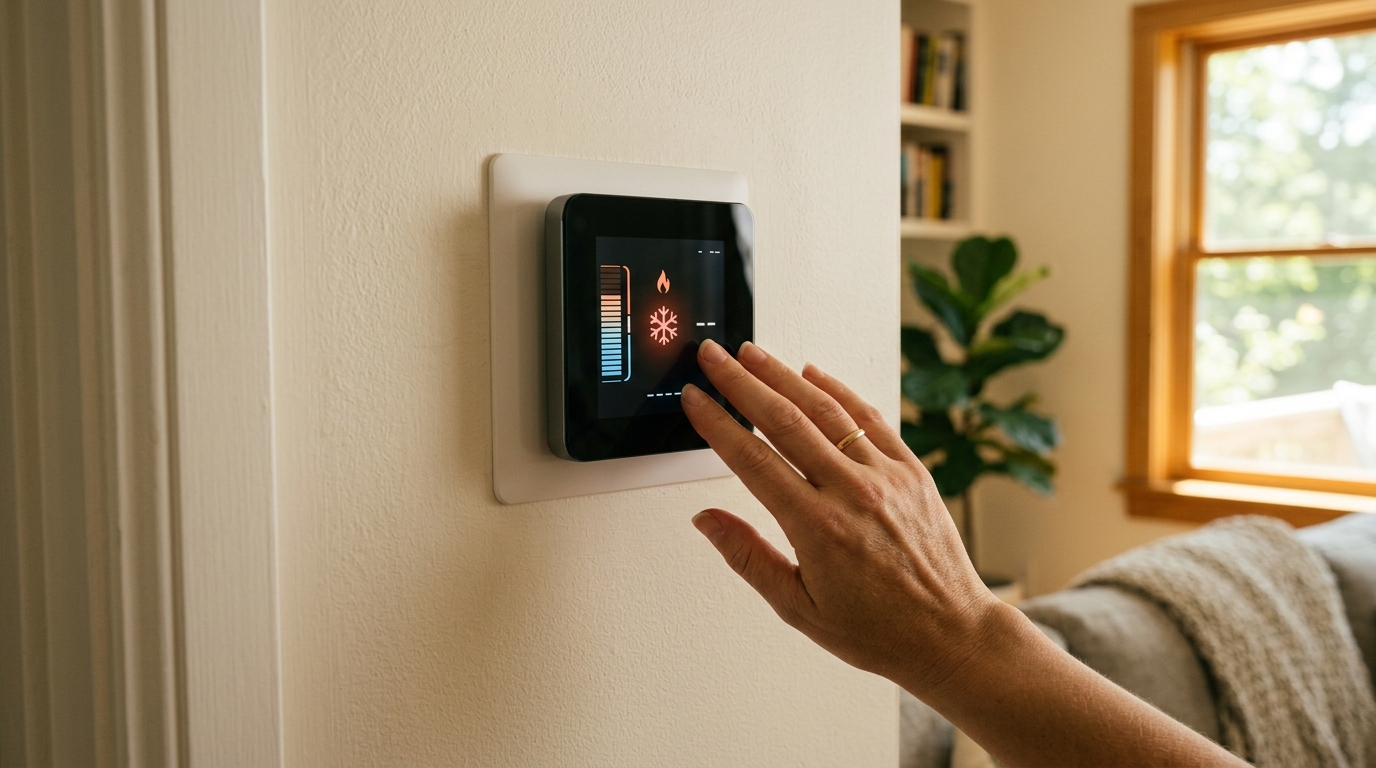
Before calling for emergency AC repair, check the thermostat, air filter, breaker, outdoor unit, and vents. These checks are safe for most homeowners and can help the technician understand what failed. Do not open electrical panels inside the condenser, handle refrigerant lines, or keep resetting a breaker that trips.
Start with the thermostat. Make sure it is set to cool, the temperature setting is below the room temperature, and the fan is on auto instead of constantly running. If the thermostat screen is blank, replace batteries if your model uses them. A blank thermostat can also point to a float switch, transformer, or wiring issue that needs a technician.
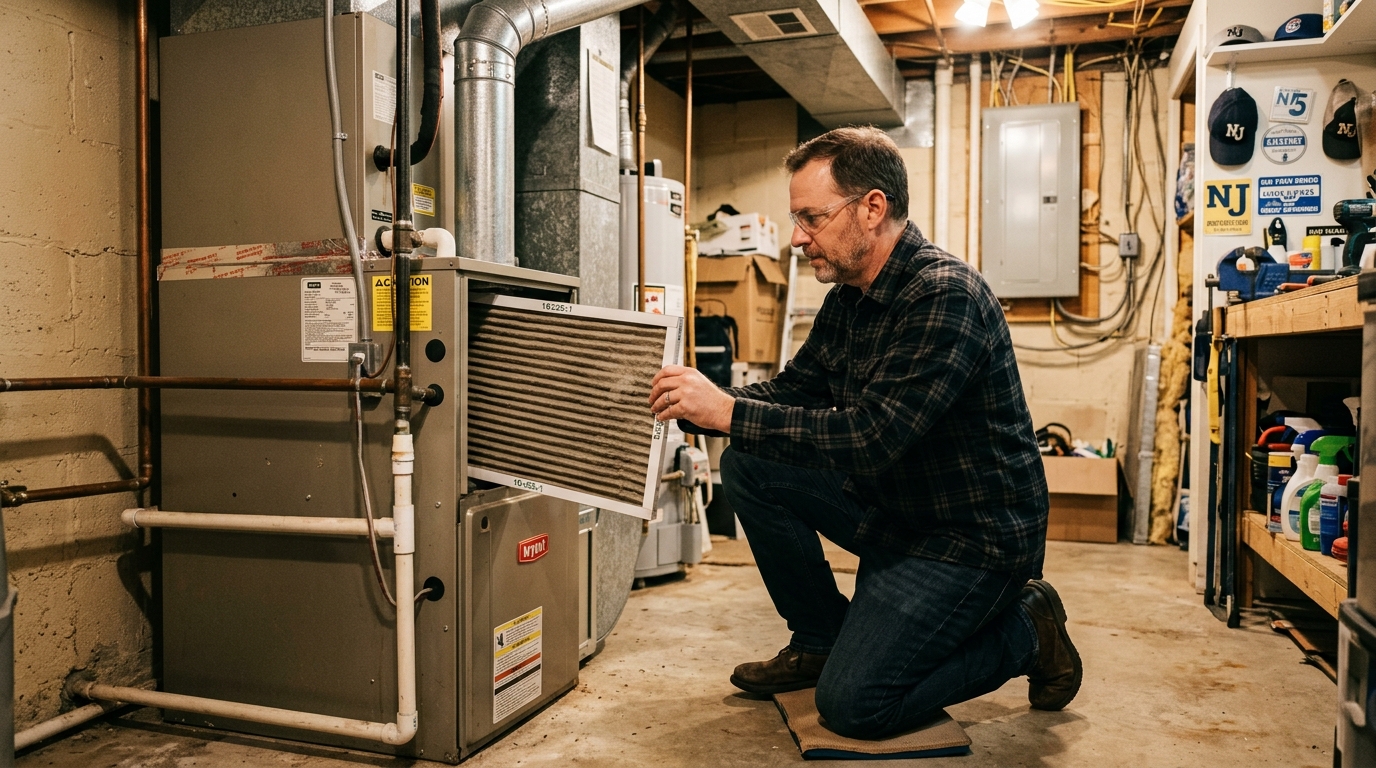
Next, check the filter. A clogged filter can starve the system of airflow, cause the coil to freeze, and make the AC run constantly without cooling. If the filter is packed with dust, replace it and let the system sit off for a while if you see ice. For more cooling-specific troubleshooting, see our guide on an AC running but not cooling.
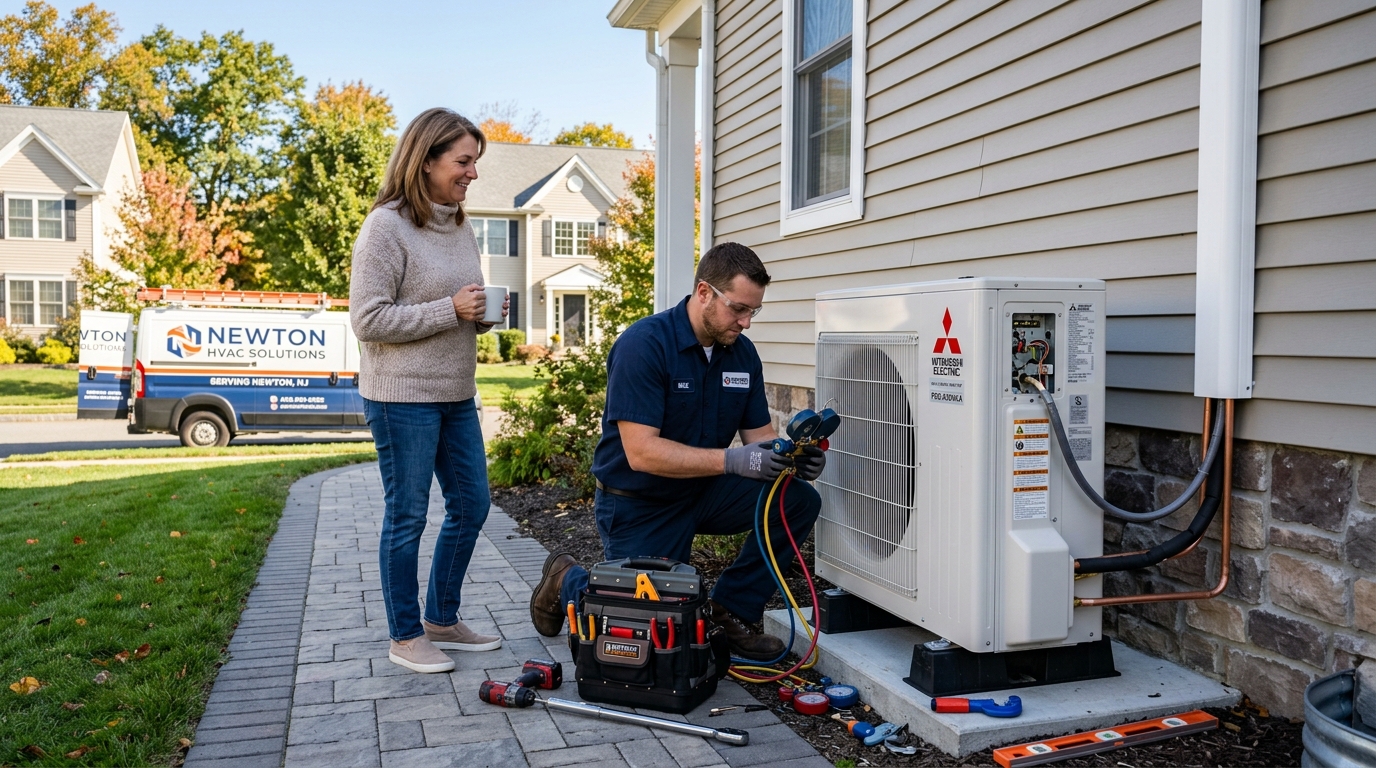
Then look outside. Clear leaves, grass clippings, and debris from around the condenser. The outdoor unit needs room to release heat. If it is covered in cottonwood, pollen, or lawn debris, airflow can drop enough to raise system pressure and reduce cooling.
Finally, check the breaker once. If it is tripped, reset it one time only. If it trips again, stop. Repeated trips can signal a compressor, capacitor, wiring, or motor problem. That is not a DIY repair.
Why does an AC stop cooling during Sussex County heat waves?
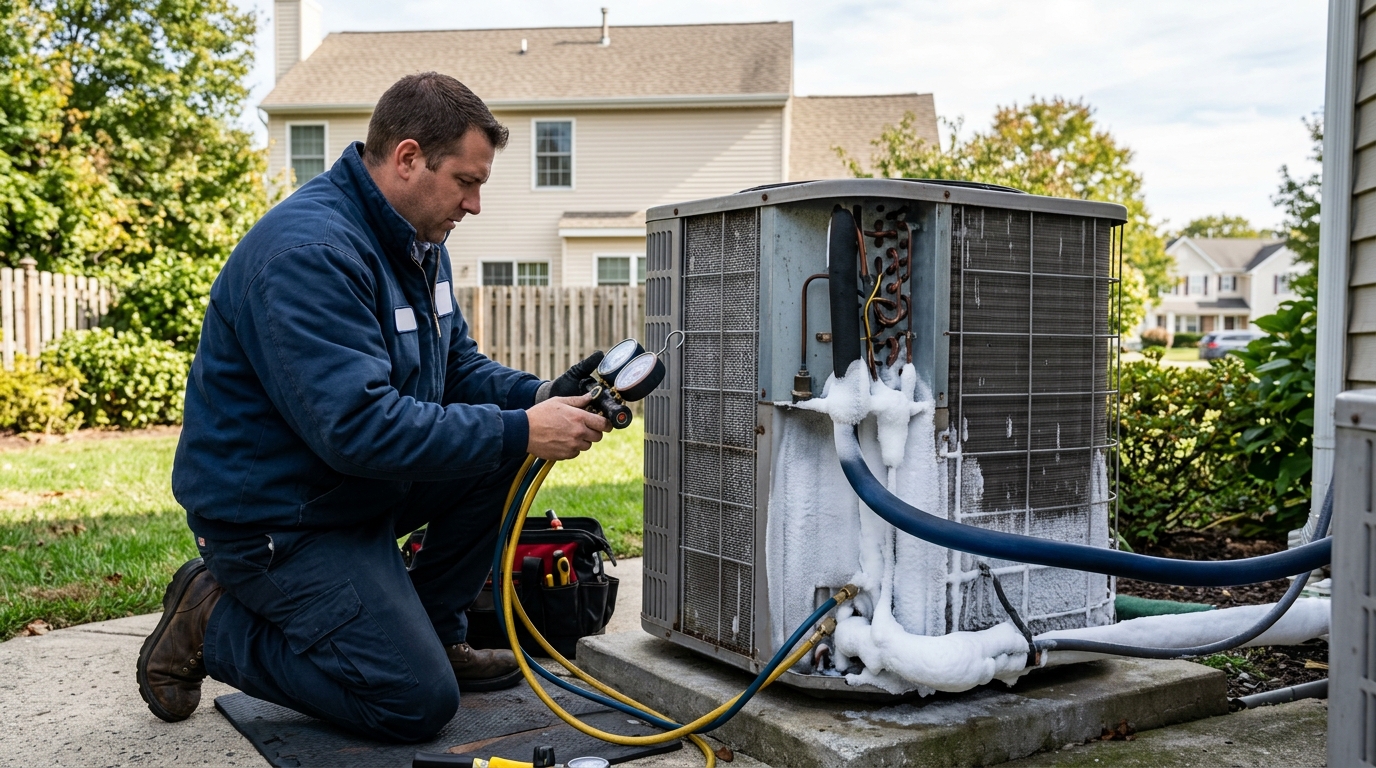
An AC often stops cooling during a heat wave because the system is running longer than usual and weak parts finally fail. Dirty coils, clogged filters, low refrigerant, weak capacitors, failing blower motors, blocked drains, and aging equipment all become more obvious when outdoor temperatures stay high for several days.
Newton and Sussex County homes can be especially tough on cooling systems. Many homes have additions, finished basements, older duct layouts, or shaded rooms connected to sunny second floors. That can create long run times and uneven comfort. If the AC was already marginal in June, a July heat wave can expose the problem fast.
Common causes include:
- Dirty condenser coil: The outdoor unit cannot reject heat efficiently.
- Frozen evaporator coil: Low airflow or refrigerant problems can turn the indoor coil into ice.
- Failed capacitor: The outdoor fan or compressor may struggle to start, hum, or shut down.
- Clogged condensate drain: Water backs up and can trigger a safety switch or leak into the home.
- Low refrigerant: Refrigerant loss reduces cooling and can indicate a leak that needs professional diagnosis.
- Undersized or aging system: Older systems may run constantly and still fail to hold temperature.
If your system regularly struggles in high heat, a repair may solve the immediate problem, but it is also worth comparing repair cost, age, and efficiency. Our team can help you decide whether AC repair in Newton NJ is enough or whether replacement planning makes more sense.
Should you repair or replace an AC that keeps breaking down?

Repair is usually the better first step when the AC is newer, the issue is isolated, and the repair cost is reasonable. Replacement becomes more practical when the system is older, uses outdated components, needs major compressor or coil work, or has repeated breakdowns during peak cooling weather.
A good technician should not push replacement just because the house is hot. The first job is to restore safe cooling if possible. After the emergency is controlled, look at the bigger picture: system age, repair history, comfort problems, utility bills, refrigerant type, and whether the equipment is sized correctly for the home.
If the AC is 10 to 15 years old and the repair is expensive, ask for both options. A short-term repair may buy time, while a planned AC installation in Newton NJ may reduce repeat emergency calls. For homeowners seeing weak performance, high humidity, and rising bills, our guide on signs you need a new air conditioner can help frame the decision.
The same logic applies to homes with heat pumps. If the cooling issue is part of a broader year-round comfort problem, a heat pump or high-efficiency AC replacement may be part of the long-term fix. But the immediate repair visit should still diagnose the failure clearly before any replacement decision.
How can Newton homeowners prevent repeat AC emergencies?
The best way to prevent repeat AC emergencies is to combine seasonal maintenance with better airflow habits. Replace filters on schedule, keep the outdoor unit clear, schedule a spring tune-up, and address weak airflow or odd noises before the first major heat wave.
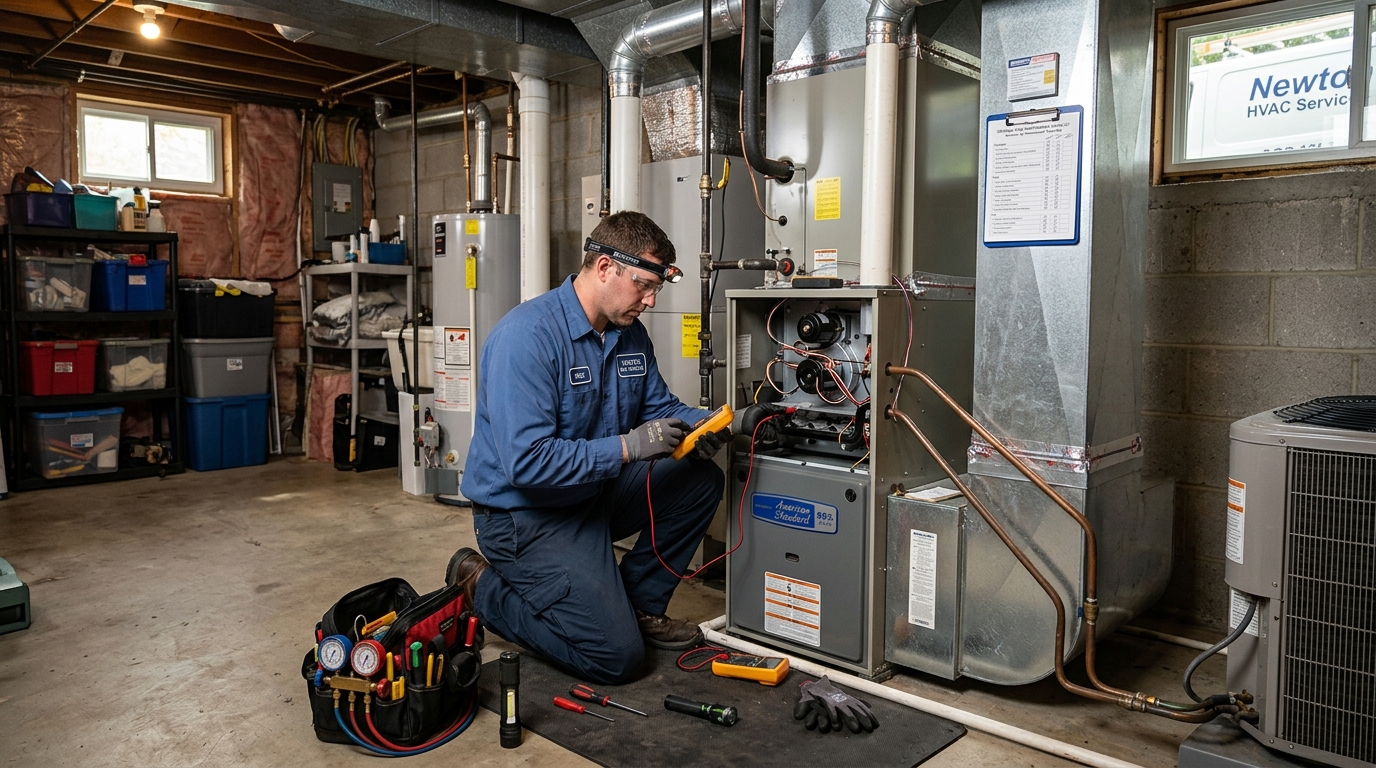
Maintenance matters because many emergency calls begin as small issues. A weak capacitor, dirty coil, clogged drain, or low airflow problem can often be caught before the system fails on the hottest day of the week. During a maintenance visit, a technician can test electrical components, clean coils, inspect drains, measure temperature split, and flag parts that are outside normal range.
Homeowners can also help the system between visits:
- Change filters every 1 to 3 months, depending on pets, dust, and usage.
- Keep at least two feet of clearance around the outdoor condenser.
- Avoid closing too many supply vents, which can reduce airflow.
- Use ceiling fans to improve comfort without lowering the thermostat too far.
- Call early when you notice short cycling, ice, buzzing, or weak airflow.
If you want one visit to cover the whole system before peak weather, schedule annual HVAC maintenance in Newton NJ. Preventive service supports AC reliability in summer and helps catch heating issues before winter.
FAQs about emergency AC repair in Newton NJ
How fast should I call if my AC is blowing warm air?
Call the same day if the house temperature is rising, the system has ice, or vulnerable family members are affected by heat. If the issue is only a thermostat setting or dirty filter, you may be able to correct it, but ongoing warm airflow needs professional diagnosis.
Should I turn off my AC if I see ice?
Yes. Turn the cooling mode off if you see ice on the refrigerant line or coil cabinet. Running the system while frozen can reduce airflow further and may damage components. A technician can determine whether the cause is airflow, refrigerant, or another mechanical issue.
Is a tripped AC breaker an emergency?
A breaker that trips once may be a temporary overload, but a breaker that trips again after one reset should be treated as urgent. Do not keep resetting it. Repeated trips can point to electrical or compressor problems that need professional service.
Can low refrigerant be fixed by adding more refrigerant?
Low refrigerant usually means there is a leak or another system issue. Adding refrigerant without finding the cause may only create a temporary fix. A qualified HVAC technician should diagnose the leak, repair options, and system condition.
Get emergency cooling help in Newton and Sussex County
When cooling fails, Constant Air Service helps homeowners in Newton, Sussex County, and nearby North Jersey communities restore comfort safely. If your AC is blowing warm air, freezing up, leaking, or shutting down in the heat, request emergency HVAC service in Newton and get a clear diagnosis before the problem gets worse.