A central air conditioner that runs continuously without lowering the indoor temperature suggests a failure in the heat transfer process rather than a complete power loss. This condition forces the blower motor to operate indefinitely, which risks secondary damage to the compressor and increases energy consumption without achieving comfort.
This guide explains how to identify common cooling failures, perform safe system resets, maintain airflow through proper coil and filter care, and recognize when local environmental factors or mechanical wear require professional intervention.
Why Is Your AC Running But Not Cooling the House?
When you find your AC not cooling house rooms even though the system is running, the issue is typically caused by restricted airflow, a clogged outdoor condenser coil, a low refrigerant charge, or a malfunctioning thermostat. When these core components fail or get blocked, your system will continue to blow air through your vents without actually removing the heat from your home.
Diagnosing an AC Running Without Cooling
To figure out why your system is struggling, start by observing its behavior. Is the outdoor unit humming, or is only the indoor fan blowing? Listen closely for unusual squealing, clicking, or rattling noises, and feel the air coming directly out of your vents.
Our licensed team at Constant Air Service often finds that Sussex County homeowners mistake a running fan for a fully functional cooling cycle. If the indoor fan is moving air but the outdoor compressor isn’t engaged, you are just circulating warm room air.
If you need a professional eye to check your system, our local air conditioning repair team can quickly diagnose the root cause and get your home back to a comfortable temperature.
The Core Reasons Your Home Stays Warm
In areas like Sparta, Vernon, and Hackettstown, our humid New Jersey summers mean your AC works overtime. This heavy workload makes these five common culprits incredibly common:
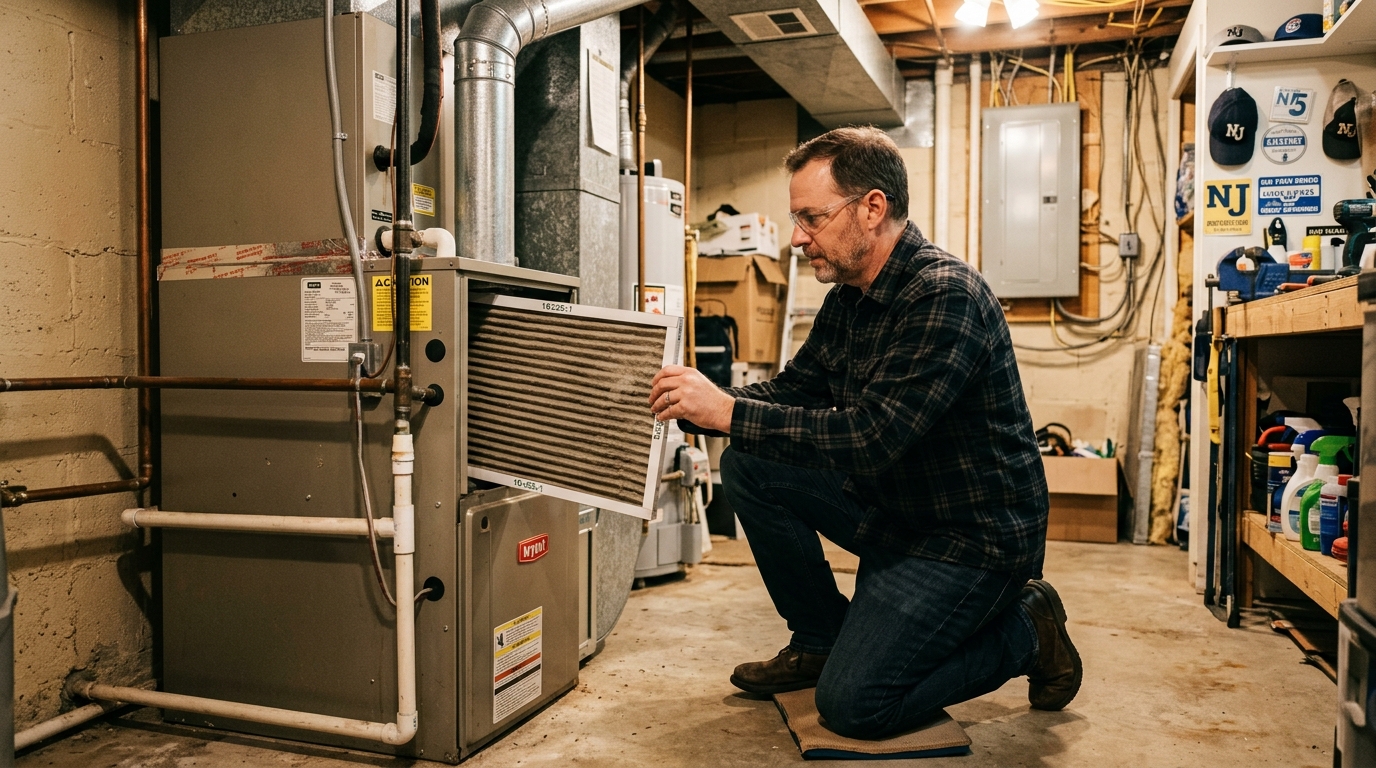
- Restricted Airflow: A clogged or dirty furnace filter stops air from flowing over your evaporator coil, causing the system to choke and sometimes freeze over.
- Dirty Condenser Coils: Your outdoor unit releases heat pulled from your home. If it is covered in dirt, pollen, or lawn debris, it cannot release heat efficiently, leaving your home warm.
- Low Refrigerant Levels: Refrigerant is the lifeblood of your AC. If your system has a leak, it won’t have enough pressure to absorb heat, resulting in warm air blowing from your vents.
- Thermostat Issues: If your thermostat is miscalibrated, out of batteries, or set incorrectly, it won’t signal your compressor to kick on.
- Frozen Evaporator Coil: When airflow is blocked or refrigerant is low, the indoor coil drops below freezing and turns into a block of ice, blocking all cooling.
Immediate Steps When Your AC Blows Warm Air
- Turn off the AC system immediately at the thermostat to prevent mechanical damage or a frozen compressor.
- Check your air filter and replace it if it looks gray, dusty, or clogged with pet hair.
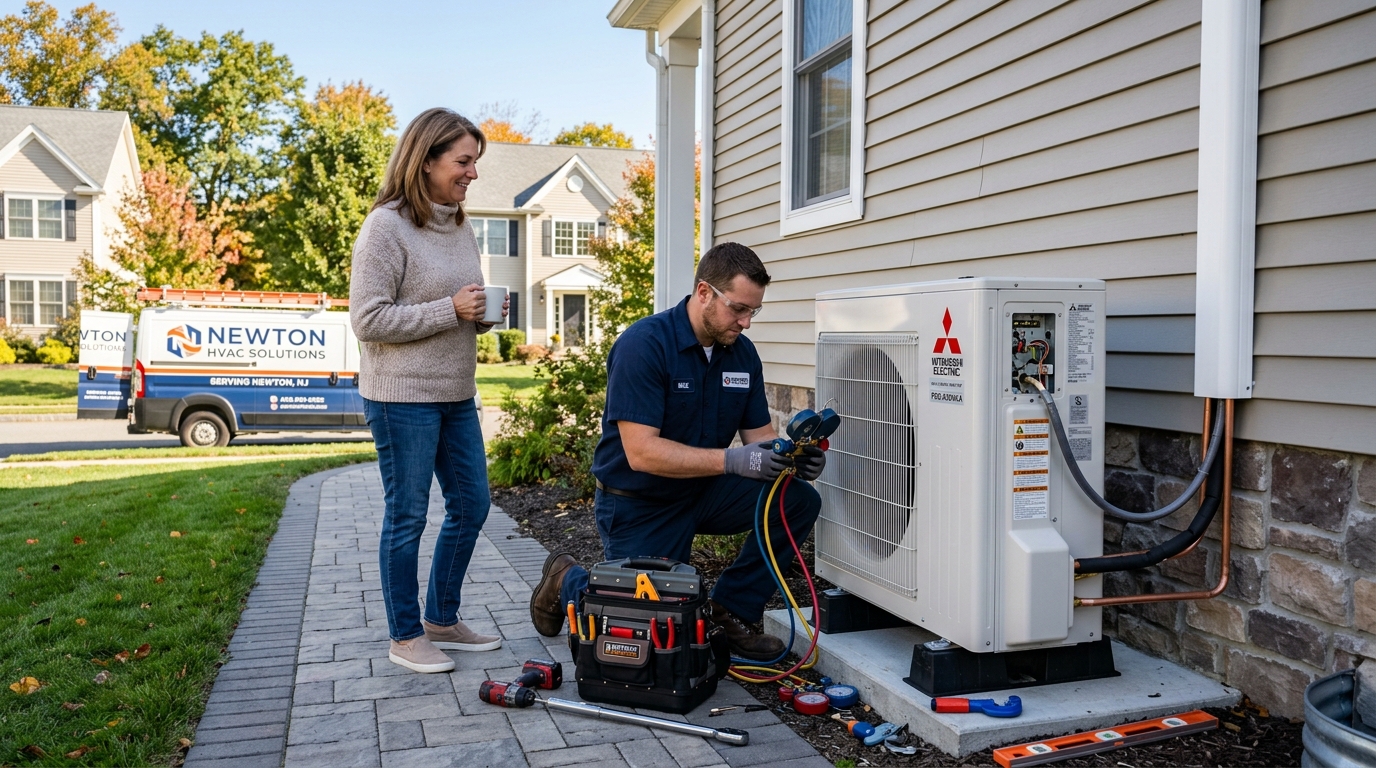
- Inspect the outdoor unit (condenser) and clear away any overgrown weeds, leaves, or debris blocking the metal fins.
- Check your circuit breaker to see if the outdoor AC switch has tripped, cutting power to the compressor while leaving the indoor fan running.
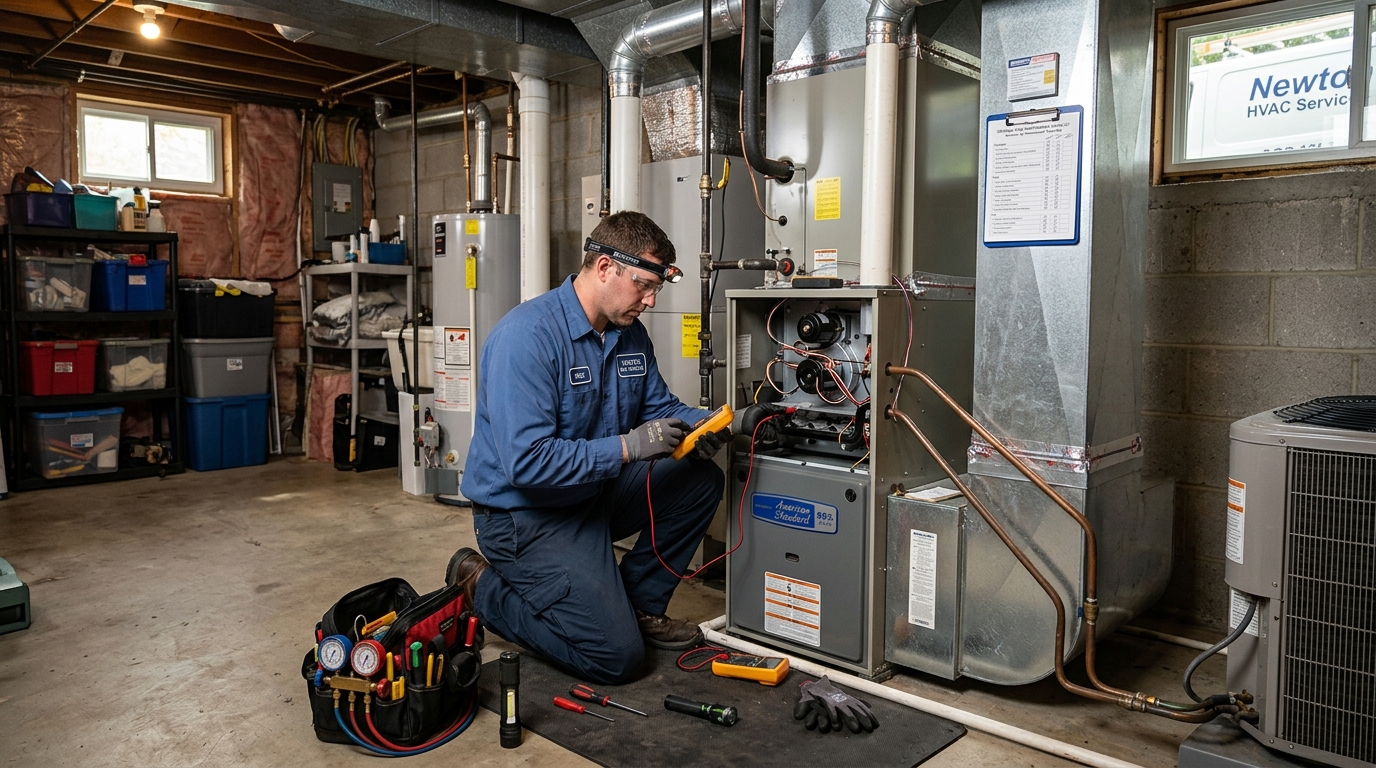
- Call a licensed professional if you suspect a refrigerant leak or electrical failure, as these require specialized diagnostic tools to fix safely.
At Constant Air Service, our family-run team has spent over 25 years helping our neighbors in Sparta, Vernon, Newton, and across Sussex County handle emergency cooling issues. We are a fully licensed NJ HVACR contractor (#19HC00108700) and answer the phone 24/7 at (973) 948-0680 to get your system running smoothly again.
The First Steps: Quick Checks, Resets, and the “3-Minute Rule”
When your home’s central air conditioner starts blowing warm air on a humid summer afternoon in Sussex County, finding a quick solution is critical. The higher elevation and unique summer humidity of regions like Newton, Sparta, and Vernon put extra pressure on local cooling systems. Before you assume you need a complete system replacement, there are a few straightforward diagnostics and reset steps you can perform to determine if the issue is a temporary glitch or a mechanical failure requiring professional AC repair.
Step-by-Step Central AC Reset Procedure
If your central air conditioner is running but not blowing cold air, a simple system reset can resolve minor electronic glitches or safety cut-outs. Follow this precise sequence:
- Turn off the thermostat: Switch the system mode from “Cool” to “Off” so the system stops calling for cooling while you reset the hardware.
- Shut off the power at the circuit breaker: At your main electrical panel, find the breaker labeled for your air conditioner (“AC”, “Condenser”, or “Compressor”) and switch it “Off.”
- Wait for the system to clear: Keep the breaker off for at least 60 seconds to drain residual charge and reset the control boards.
- Restore power at the breaker: Flip it back “On” to restore power to the outdoor condenser and indoor air handler.
- Set the thermostat back to cool: Switch the mode back to “Cool” and set the target about 3 degrees below the current room temperature.
- Wait for the compressor to cycle on: Give the system up to 10 minutes, as built-in safety delay timers prevent the compressor from starting immediately.
Demystifying the 3-Minute Rule
The 3-minute rule for air conditioners refers to a built-in protective delay timer that prevents the compressor from restarting immediately after it shuts down, protecting the motor from starting against high system pressure. When your AC cycles off, refrigerant pressures take several minutes to equalize; if the compressor restarts too soon, it works against extreme resistance, drawing excessive current, tripping breakers, or causing premature failure. In Sussex County, summer power flickers or accidental thermostat changes can trigger this delay — it’s a normal protective function, not a broken system.
Why Leaving a Warm AC On Can Ruin Your Compressor
If your air conditioner is running but failing to lower the indoor temperature, turn the system off immediately at the thermostat. Continuing to run an AC that isn’t cooling increases the risk of severe mechanical strain and permanent compressor damage:
- Compressor Overheating: The compressor relies on cool return refrigerant gas to keep its windings safe. Low refrigerant or restricted airflow removes that cooling effect, leading to heat buildup and motor burnout.
- Liquid Slugging: A frozen evaporator coil can send liquid refrigerant back through the suction line. Because compressors compress gas, not liquid, this can destroy internal valves and pistons.
- Lubrication Failure: Excess heat and abnormal pressures break down the compressor’s oil, causing rapid wear and a seized motor.
Replacing a failed compressor is one of the most expensive repairs a homeowner can face. Jim Reilly and the family team at Constant Air Service (NJ HVACR license #19HC00108700) recommend turning the unit completely off if it fails to cool within a reasonable timeframe. If your system stays warm after a reset, our Newton-based technicians are available 24/7 to diagnose and resolve the issue before irreversible compressor damage occurs.
Understanding Frozen Evaporator Coils and Refrigerant Leaks
Two of the most common, interconnected reasons an AC runs but doesn’t cool are frozen evaporator coils and refrigerant leaks.
Why Evaporator Coils Freeze
Your indoor evaporator coil holds cold refrigerant; the blower draws warm, humid air across it, the refrigerant absorbs the heat, and moisture condenses and drains away. If the balance is disrupted and the coil surface drops below 32°F, that moisture freezes onto the coil, building an insulating block of ice that blocks airflow entirely. Two problems trigger this: restricted airflow (a clogged filter or blocked returns) and low refrigerant (lower pressure makes the remaining refrigerant run excessively cold).
Key Warning Signs of a Low Refrigerant Charge
Your AC runs on a closed loop — it does not consume refrigerant, so if it’s low, you have a leak. Watch for:
- Lukewarm air from vents — air feels room-temperature instead of crisp and cold.
- Ice on coils or copper lines — frost on the indoor coil cabinet or the outdoor line set.
- Hissing or bubbling sounds — an active leak near the air handler or outdoor unit. A sharp hiss usually means gaseous refrigerant escaping a pinhole; a bubbling sound points to a liquid-line leak.
- Spiking energy bills — the system runs continuously trying to satisfy the thermostat.
Why DIY Refrigerant Recharges Are Dangerous and Illegal
It is not safe to attempt a DIY refrigerant repair, and it is illegal under federal law. The EPA strictly prohibits unlicensed individuals from handling regulated refrigerants — see EPA Section 608 regulations. Beyond legal penalties, refrigerant is under immense pressure at sub-zero temperatures (risking burns, frostbite, and asphyxiation), and overcharging can flood the compressor with liquid and destroy it. Adding refrigerant also never fixes the leak — a certified technician must locate it, evacuate the system, repair the lines, pressure-test with nitrogen, and recharge to the exact manufacturer weight. Constant Air Service’s EPA-certified technicians (NJ HVACR #19HC00108700) handle this safely; we answer 24/7 at (973) 948-0680.
Outdoor Condenser Maintenance and Clearance
Your outdoor condenser releases the heat pulled from your indoor air. When it’s choked by dirt, weeds, or debris, the whole system bogs down and blows lukewarm air.
How to Safely Clean Your Outdoor Condenser Unit
- Shut off the power entirely at the outdoor disconnect switch and the dedicated breaker inside.
- Clear large debris — hand-pick twigs, leaves, weeds, and vines around the cabinet.
- Vacuum the exterior fins with a soft brush nozzle, working in the direction of the fins with light pressure.
- Gently wash with a garden hose from the inside out. Never use a pressure washer — it crushes the aluminum fins and blocks airflow.
- Straighten bent fins with an HVAC fin comb if needed.
- Restore power once the unit is fully dry.
The 2-Foot Rule: Proper Clearance
- Plants and shrubs: keep at least 2 feet of clear space on all sides; trim NJ summer weeds and don’t let vines climb the grilles.
- Decks and overhangs: a unit under a deck needs 5–6 feet of vertical clearance so hot discharge air doesn’t recirculate and freeze the system.
- Fences and screens: keep decorative fencing 2–3 feet away; avoid solid enclosures that trap heat.
For more guidance, review the official Energy Star home cooling tips.
Air Filter Maintenance for Maximum Airflow
Change your AC filter every 30 to 90 days — but local factors matter. Sussex County’s heavy summer humidity travels through return ducts and swells filter fibers, caking them with dust and pollen, restricting airflow and freezing the coil. Use the table below to pick the right filter and schedule:
| Filter Type | MERV Rating | Material | Replacement Frequency | Sussex County Humidity Suitability |
|---|---|---|---|---|
| Flat Fiberglass | MERV 1–4 | Spun glass + cardboard frame | Every 30 days (max) | Poor — clogs and sags when damp; little protection against fine pollen or mold spores. |
| Pleated Synthetic | MERV 8–11 | Pleated cotton/polyester | Every 60–90 days | Good — recommended; pleats handle moisture and dust without suffocating airflow. Swap every ~45 days in peak heat. |
| High-Efficiency Pleated | MERV 12–16 | Deep-pleated media | Every 3–6 months | Excellent for allergens and mold; inspect monthly so humidity doesn’t clog it early. |
| Washable Electrostatic | MERV 4–10 | Woven self-charging fibers | Wash every 30 days | Risky — reinstalling before fully dry breeds mold/mildew in our humid summers. |
If you’ve cleaned the outdoor unit, cleared the brush, swapped the filter, and your home is still warm, it’s time for professional diagnostics. Since 1999, Jim Reilly and our family-owned team at Constant Air Service have provided honest cooling solutions. As licensed NJ HVACR contractors (#19HC00108700) in Newton, we’re available 24/7 — call (973) 948-0680.
How Sussex County’s Climate Impacts AC Performance
Our local geography forces AC systems to work harder than in other parts of New Jersey. Sussex County sits at a higher elevation, which means colder winters but also heavy, dense humidity trapped in valleys and ridges during summer. An AC has two jobs: sensible cooling (lowering air temperature) and latent cooling (wringing out moisture). Because of the heavy Appalachian humidity load, your AC dedicates immense energy to latent cooling before you feel a temperature drop. To support it:
- Add a dehumidifier to handle the latent load so the AC can focus on cooling.
- Optimize attic ventilation (ridge/soffit vents or an attic fan) so trapped heat escapes.
- Use strategic shading — drapes, cellular shades, or deciduous trees on the south and west sides.
- Maintain clean airflow — replace filters every 30–90 days so coils don’t freeze against high humidity.
How Heating Maintenance and Ductwork Affect AC Cooling
In most Sussex County homes, your AC and heating share the same air handler and blower motor — so winter wear directly impacts summer cooling. A dirty furnace filter or a blower worn down from heavy winter use moves air too slowly, the cool air loses temperature before reaching your rooms, and the coil can freeze.
Signs of leaking ductwork: uneven room temperatures, localized dust near supply registers, whistling vents, and unexpected utility-bill spikes as conditioned air escapes into attics or crawlspaces. Leaky ducts force longer cycles and accelerate wear.
When to Call a Pro vs. Upgrading to a Heat Pump
Critical Signs That Require a Licensed Professional
Shut the system down and call a pro if you notice:
- Burning electrical odors — overheating wires or a failing motor.
- Repeatedly tripped breakers — never keep resetting; it can cause an electrical fire.
- Grinding, screeching, or clanking noises — failed bearings or compressor damage.
- Refrigerant leaks — ice on coils, hissing/bubbling, or pooling liquid (requires EPA certification).
If you see any of these, book professional air conditioning services in Newton to diagnose and repair safely.
Repair vs. Replace
Consider the “50% Rule”: if a repair exceeds 50% of the system’s value, replacement is usually smarter. As of January 1, 2023, NJ follows stricter SEER2 efficiency standards, so older systems (often using obsolete R-22) cost far more to run and repair.
| Decision Factor | Favor Repair | Favor Replacement |
|---|---|---|
| System Age | Under 10 years | 10–15+ years |
| Repair Frequency | Rare, minor issues | Multiple calls in 2 years |
| Efficiency | Meets needs comfortably | Pre-2023 low SEER (fails SEER2) |
| Relative Cost | Repair under 50% of value | Repair over 50% of a new system |
A Heat Pump as a High-Efficiency Alternative
A heat pump cools exactly like central AC in summer, then reverses in winter to capture outdoor heat instead of burning fuel. Because heat pumps move heat rather than generate it, they’re highly efficient — cutting winter oil or propane bills while delivering premium cooling in summer.
24/7 Emergency HVAC Care for Newton Homes
When a heatwave hits, indoor temperatures climb fast — dangerous for young children, the elderly, and pets. An emergency HVAC team provides rapid-response troubleshooting with fully stocked trucks to restore safe temperatures the same day. Constant Air Service has kept Newton and Sussex County homes comfortable since 1999 — no third-party call centers or rotating subcontractors, just real local technicians. Call (973) 948-0680.
Newton AC Troubleshooting FAQs
How much does it cost to fix an AC that runs but doesn’t cool in New Jersey?
Repair costs typically range from $150 to $1,500+ depending on the cause. A simple filter swap or breaker reset may only cost the service call ($80–$150). Mid-range repairs like a capacitor, contactor, or condenser fan motor run $200–$600. A refrigerant leak repair and recharge, or a failed compressor, can climb from $800 to over $2,000.
Why is only my indoor fan blowing while the outdoor compressor is silent?
When the indoor blower runs but the outdoor unit is silent, the problem is usually electrical or mechanical in the outdoor unit. A blown capacitor is the most common culprit, followed by a faulty contactor, a tripped high-pressure switch, a blown disconnect fuse, or a broken thermostat wire. These handle high-voltage electricity and require professional diagnosis.
Can a dirty air filter shut down my whole central AC?
Yes. A severely clogged filter restricts airflow, the evaporator coil drops below freezing, humidity freezes onto the metal, and a solid block of ice forms — blocking airflow until safety switches or a tripped breaker shut the system down to protect the compressor.
Is it normal for my AC to run nonstop on 90°+ days in Sussex County?
It’s common. Standard systems are designed to maintain about a 20-degree difference between outdoor and indoor air, so on extreme days the AC runs almost continuously to keep pace. But if it runs nonstop without keeping you comfortable, or the vents blow lukewarm air, have a technician inspect it before a minor issue becomes a full breakdown.
Restore Cool Comfort to Your Sussex County Home Today
If your air conditioner is running but failing to cool, don’t let a heatwave turn your home into an oven. Jim Reilly and the team at Constant Air Service have kept Newton and Sussex County homes comfortable since 1999. As a family-owned, fully licensed NJ HVACR contractor (#19HC00108700), we answer the phone 24/7 with real help from real local technicians. Call (973) 948-0680 or schedule professional air conditioning services in Newton for a fast, reliable cooling diagnostic.
Furnace Tune-Up & Maintenance in Sussex County, NJ | AC Tune-Up & Maintenance in Sussex County, NJ | HVAC services in HVAC Services in Newton, NJ
Constant Air Service handles this for homeowners across Newton and Sussex County — licensed, family-owned since 1999, and available 24/7. Explore the related services:
Call (973) 948-0680