A furnace blowing cold air occurs when the system blower motor remains active despite the heating mechanism failing to produce or sustain heat. While this often indicates a minor issue like a configuration error, it can also signify a safety shutdown triggered by the system to prevent damage or dangerous conditions.
Understanding the root cause is essential to avoid unnecessary utility costs and prevent further strain on your equipment. When a furnace continues to circulate room-temperature air, it often points to a mismatch between thermostat settings, restricted airflow, or a disruption in the ignition sequence.
This guide clarifies the difference between a furnace not starting and one blowing cold air, explores common mechanical and electrical culprits, outlines safe reset procedures, and defines the point at which professional intervention becomes necessary to ensure safety and system longevity.
Furnace Not Turning On vs. Blowing Cold Air: Understanding the Difference
The main difference between a furnace not turning on and a furnace blowing cold air is that a furnace that won’t turn on is suffering from a complete electrical, power, or ignition startup failure, whereas a furnace blowing cold air has an active blower motor but a failed heating cycle. Understanding this distinction helps Sussex County homeowners determine whether their heating system is completely powerless or simply failing to ignite the fuel source.
Identifying a Total Power Failure (Furnace Not Turning On)
When a furnace refuses to turn on entirely, the system typically remains completely silent and inactive. This issue often points to a total power interruption or a tripped safety control rather than a simple heating cycle issue. For homeowners in the Newton area, a dead furnace frequently traces back to a tripped circuit breaker, a blown fuse, or a flipped furnace power switch, which can easily be mistaken for a standard light switch.
Additionally, critical safety mechanisms—such as a tripped high-limit switch or a clogged condensate drain line—can shut down the system’s power completely to prevent hazardous conditions. If your thermostat screen is completely blank or you do not hear any clicking, humming, or combustion sounds when raising the temperature, the unit is likely experiencing an electrical disconnect. In these cases, professional furnace repair is often needed to safely resolve the underlying electrical or control board failure.
Pinpointing Airflow Issues (Furnace Running but Blowing Cold Air)
Conversely, if you hear your heating system running but only feel chilly drafts coming from your vents, your furnace is receiving electrical power, but the burner assembly or heating element is failing to warm the air. In this scenario, the blower motor operates as designed to circulate air through your home, but the air never passes over a functioning heat source.
This behavior is frequently caused by a dirty flame sensor, a failed hot surface igniter, or a closed gas valve. It can also occur when a severely clogged air filter restricts airflow, causing the system to overheat and trigger a safety shutdown of the burners while keeping the blower fan active to cool the heat exchanger. When your furnace is not blowing hot air, the diagnostic focus shifts away from basic electrical supply lines and toward fuel delivery, ignition components, and proper system ventilation.
Key Differences at a Glance
To help you quickly assess your heating system’s current state, review this comparison of common symptoms, power states, and initial troubleshooting steps:
- System Power State: Furnace Not Turning On — the unit remains completely silent, displays no indicator lights, and shows no mechanical or electrical activity. Furnace Blowing Cold Air — the system is actively receiving power, and the blower fan is running to move air through the ductwork.
- Common Warning Signs: Furnace Not Turning On — a blank or unresponsive thermostat screen, a total lack of sound from the utility closet, or a breaker that immediately trips upon reset. Furnace Blowing Cold Air — persistent lukewarm or cold air drafts from your registers, rapid on-and-off cycling (short-cycling), or a blower fan that runs continuously without warming the house.
- Initial Diagnostic Starting Points: Furnace Not Turning On — inspect your home’s main electrical panel for tripped breakers, confirm the furnace’s physical power switch is set to “On,” and replace the thermostat batteries. Furnace Blowing Cold Air — replace a dirty air filter, confirm the thermostat is set to “Heat” rather than “Fan On,” and verify the gas line valve is fully open.
If these basic checks do not restore warm air to your home, contacting a licensed NJ HVAC contractor is the safest and most efficient way to diagnose and resolve complex heating issues before the winter chill sets in.
Why Is My Furnace Blowing Cold or Lukewarm Air? Common Culprits
Thermostat Settings and Fan Settings Misconfigurations
Your furnace is blowing air but no heat because your thermostat fan is likely set to “On” rather than “Auto.” When set to “On”, the blower fan runs continuously 24/7, even when the burners are completely off and no heating cycle is occurring. This results in room-temperature or lukewarm air circulating through your vents, making you wonder, “Why is my furnace only blowing lukewarm air?” Switching the setting back to “Auto” ensures the fan only runs when the furnace is actively heating.
The Short-Cycling Cycle: Why Heat Turns Cold Quickly
Your furnace blows hot air for a short time and then turns cold because of a protective cycle known as short-cycling. When the system overheats, the high-limit safety switch immediately cuts power to the burners to prevent catastrophic damage, such as a cracked heat exchanger. However, the blower fan continues to run to cool the system down, resulting in cold air blowing through your home. This safety mechanism is most commonly triggered by restricted airflow—a critical issue that is almost always caused by a severely dirty air filter, which we will discuss next.
Electrical Interruptions and Tripped Circuit Breakers
Yes, a tripped circuit breaker can absolutely be the reason for your furnace not heating while still blowing cold air. Many modern heating systems utilize split-power setups or have separate circuits for the ignition/gas valve and the main blower. If a breaker trips and cuts power to the heating components, the burner will fail to ignite, but the blower motor may continue running on its own circuit. If you suspect an electrical issue is causing your furnace not blowing hot air, check your electrical panel or contact professional furnace repair experts.
Other minor electrical faults that can prevent your furnace from heating include:
- A loose or damaged thermostat wire preventing communication with the furnace control board.
- A blown low-voltage fuse (typically a 3-amp or 5-amp fuse) on the furnace’s integrated control board.
- A faulty or dirty flame sensor failing to detect the burner flame and shutting the gas valve for safety.
- A failed igniter that cannot spark or glow hot enough to light the incoming gas supply.
The Surprising Impact of Dirty Air Filters on Heating Performance
How Restricted Airflow Triggers Furnace Safety Shutdowns
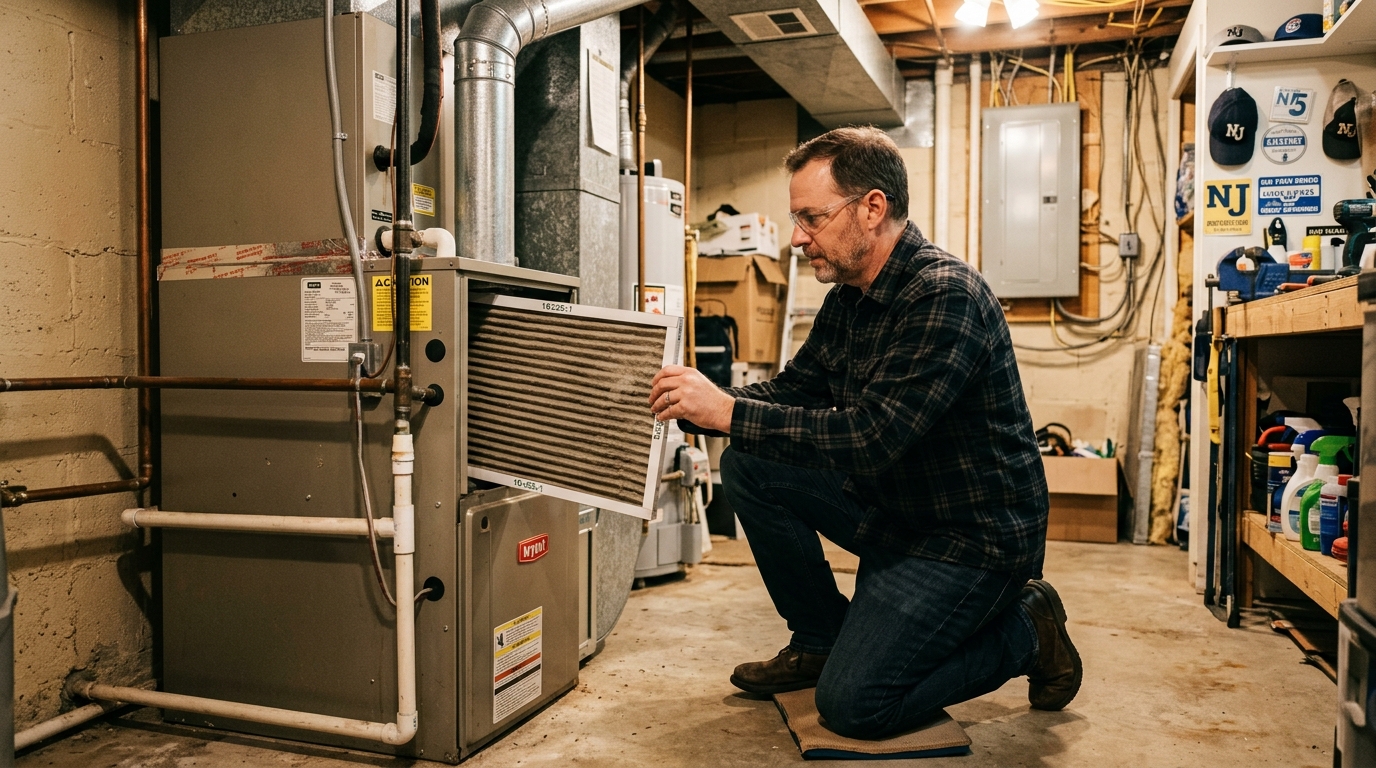
Can a dirty air filter cause a furnace to stop blowing hot air? Yes, absolutely. While it might seem like a simple piece of mesh, your air filter is the primary gatekeeper for your home’s climate control system. When the filter becomes heavily clogged with dust, pet dander, and household debris, it acts as a physical barrier that restricts the volume of air your blower fan can pull into the system. This restriction triggers a direct, highly destructive thermodynamic chain reaction inside the furnace cabinet.
Under normal operating conditions, cool air from your home’s return ducts passes over the hot metal walls of the heat exchanger. This continuous stream of air absorbs the thermal energy, cooling the heat exchanger while delivering warm air to your living spaces. When airflow is choked off by a dirty filter, there is simply not enough moving air to carry that heat away. As a result, extreme heat builds up rapidly within the furnace jacket.
To prevent the metal heat exchanger from warping, cracking, or causing a fire, your system relies on a built-in safety sensor known as the high-limit switch. When internal temperatures exceed safe limits, this switch trips, instantly shutting off the gas burners. However, the blower fan continues to run to cool the components, so your vents quickly begin blowing cold or lukewarm air. If this cycle repeats too many times, the system enters a hard lockout, requiring professional furnace repair and inspection to safely reset the switch and verify the heat exchanger has not suffered structural damage.
Determining Your Ideal Filter Replacement Schedule
How often should I change my furnace filter? While standard advice suggests checking it once a month, your optimal replacement schedule depends on your household’s specific parameters. Homes with shedding pets, residents with seasonal allergies, or properties near dusty areas require far more frequent filter swaps than quiet, pet-free households.
Proactively swapping your air filter protects your heat exchanger from dangerous limit-trips, and it aligns with U.S. Department of Energy guidelines on home heating systems, which note that routine filter maintenance is the single most important task to keep your heating system running efficiently. Integrating filter replacements with routine professional HVAC maintenance keeps your equipment safe and reliable all winter long.
To help you determine which filter best suits your household, consult the comparison table below:
| Filter Type | MERV Rating | Replacement Frequency | Airflow Impact | Primary Characteristics |
|---|---|---|---|---|
| Fiberglass | MERV 1–4 | Every 30 days | Very Low | Protects internal furnace parts from large debris; minimal filtration for allergens or fine dust. |
| Pleated | MERV 5–12 | Every 60–90 days | Low to Moderate | Traps common pollutants, mold spores, and pet dander; the ideal balance for most residential systems. |
| Media / HEPA | MERV 13–16 | Every 6–12 months | High | Deep 3-to-5-inch design traps microscopic particulates; great for asthma sufferers but needs compatible ductwork. |
How to Safely Reset and Restart a Cold-Blowing Furnace
If you are wondering, “How do I reset a furnace that blows cold air?”, the solution involves shutting down power to the system, letting it cool, resetting the high-limit switch, and restarting step-by-step. Follow this three-phase protocol to safely troubleshoot, reset, and restart your cold-blowing furnace.
Phase 1: Preparation and Safety Checks
- Turn Off the Thermostat: Switch your thermostat mode to “Off” and set the fan to “Auto” instead of “On.”
- Locate the Service Switch: Find the dedicated furnace power switch—which looks like a standard light switch—on the side of the furnace cabinet or a nearby wall, and flip it “Off.”
- Verify Thermostat Communication: Confirm your thermostat is powered on. If the display is blank, replace the batteries immediately.
- Perform a Gas Smell Test: If you detect a rotten-egg odor, do not attempt to reset your furnace. Leave your home immediately and call a certified technician or your gas utility.
Phase 2: Finding and Executing the Reset Protocol
- Reset the Circuit Breaker: At your main electrical panel, flip the heating-system breaker fully “Off,” then firmly back “On.”
- Turn Off the Local Power Switch: Confirm the furnace service switch is “Off” before removing any panels.
- Access the Burner Compartment: Remove the upper cabinet access panel (many models cut power when this panel is removed).
- Press the Limit Switch Reset: Locate the manual high-limit or flame roll-out switch near the burner assembly and firmly press the small red reset button until it clicks.
- Reinstall the Panel and Power On: Reattach the access door securely, then switch the furnace power back “On.”
⚠️ Safety Warning: Resetting a tripped limit switch repeatedly without resolving the root cause is dangerous. The limit switch trips to prevent overheating—often from restricted airflow due to a clogged filter or blocked vents. Forcing repeated restarts can crack your heat exchanger and allow deadly carbon monoxide into your home. If your limit switch trips a second time, shut off the system and schedule professional furnace repair in Newton, NJ.
Phase 3: Forcing a Safe Restart
Switch the thermostat back to “Heat” and raise the target temperature at least five degrees above the current room temperature to force a call for heat. You should hear the draft inducer motor turn on first, purging residual gas. Within a minute, the hot surface igniter glows orange, the gas valve clicks open, and the burners ignite with a clean blue flame. Let the system run 10 to 15 minutes to confirm the blower distributes warm air. If the burners shut down early or the system returns to blowing cold air, turn the power off and contact an experienced HVAC contractor in Newton, NJ.
Evaluating the Igniter, Pilot Light, and Control Board Signals
Inspecting Hot Surface Igniters for Cracks or Failure
In modern gas furnaces, the heating cycle begins when the thermostat sends a signal to the hot surface igniter (HSI), which glows white-hot to ignite the gas. If you are troubleshooting a cold furnace, you may ask: How can I tell if my furnace igniter is broken? Before touching any components, always turn off power to the furnace at the breaker and the local service switch, then remove the burner access panel.
- Visual Inspection: Examine the dark grey igniter element. Hairline cracks, fractures, or a white/greyish powdery residue mean the element has failed and must be replaced.
- Multimeter Test: Unplug the igniter and set a multimeter to measure resistance in ohms. A functional igniter typically reads between 40 and 80 ohms. An “OL” (open loop) or infinite reading means the igniter is dead.
Silicon carbide igniters are fragile—even finger oils can create hot spots that crack them—so never touch the element with bare hands. While homeowners can safely run these checks, replacing the igniter is best left to professional furnace repair in Newton, NJ.
Decoding Your Furnace Control Board Blinking Codes
If the furnace stops running, you’ll often see an LED flashing behind a small sight glass on the blower compartment door. Read the pattern before removing any panels (removing the blower door clears the diagnostic memory), then match it to the legend sticker inside the panel. Common standardized alerts include: 1 flash = limit switch lockout (often a dirty filter); 3 flashes = pressure switch stuck open (blocked exhaust vent or clogged condensate line); 5 flashes = flame rollout lockout (a critical hazard, often a cracked heat exchanger); 6 flashes = ignition lockout (dirty flame sensor or failed igniter).
Crucial Safety: Gas Smells and Malfunctioning Furnaces
Should I turn off my furnace if it isn’t heating correctly? Yes—shut it down immediately. A compromised furnace can vent lethal carbon monoxide (CO) into your living spaces. A cracked heat exchanger is a primary source of CO leaks and cannot be detected by sight; CO is tasteless, odorless, and highly toxic. Review the CDC guide on carbon monoxide safety, and if your system is failing, switch it off and schedule a certified inspection.
What should I do if I smell gas near my furnace? Treat any gas odor as a life-threatening emergency: (1) evacuate everyone and pets immediately; (2) do not operate any electrical devices or switches; (3) shut off the main gas valve only if it’s easily accessible on your way out; (4) call 911 and your gas utility from a safe distance outside; (5) do not re-enter until responders declare the building safe.
Seasonal Maintenance Prevents Heating Failures
Proactive, routine upkeep is the single most effective way to prevent sudden breakdowns. Before winter, key tasks include cleaning the burner tubes, polishing the flame sensor, checking exhaust vents for nests or leaf debris, and inspecting the heat exchanger for cracks. Professional inspections go further—certified technicians use combustion analyzers and draft gauges to verify safe venting and detect microscopic heat-exchanger cracks that are impossible to spot by eye.
Knowing When to Call a Professional
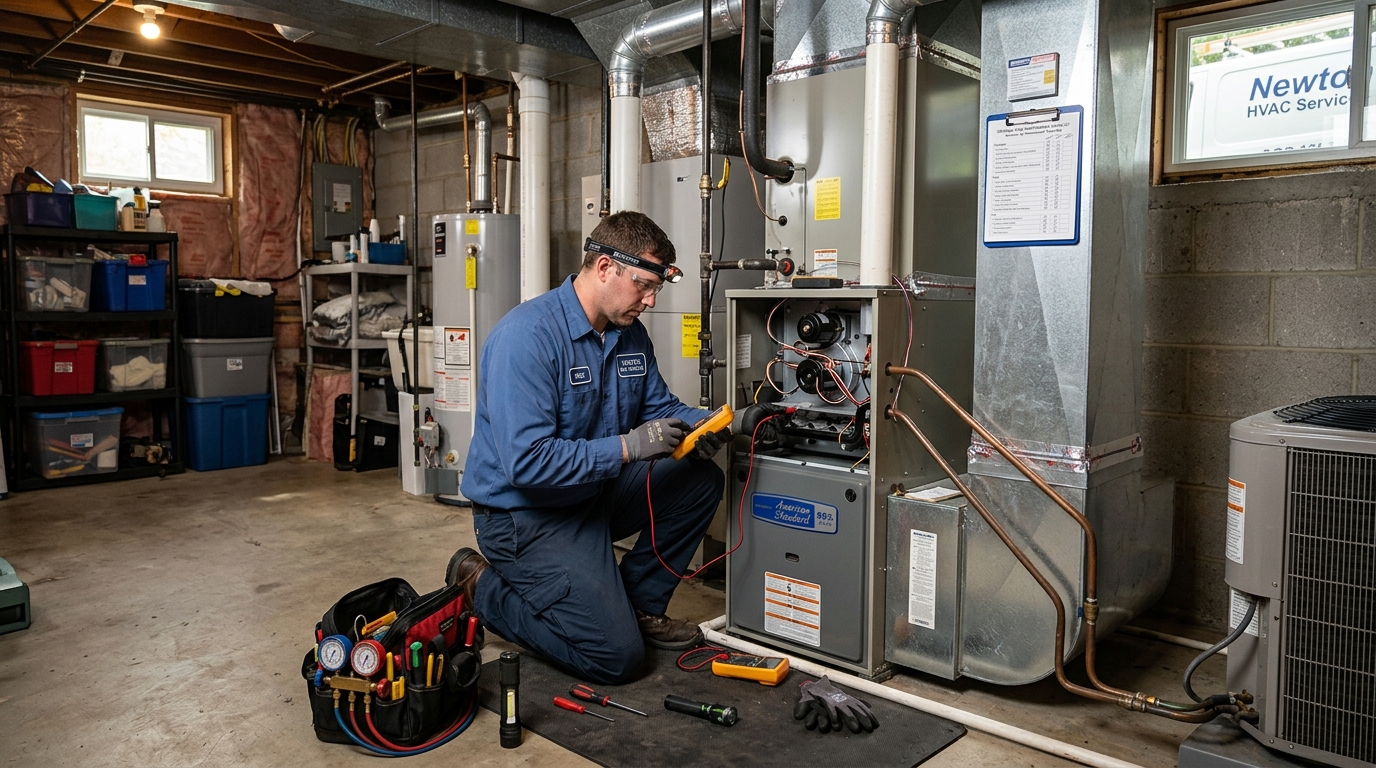
When should I call an HVAC professional for a furnace not blowing hot air? Contact a certified technician immediately if basic troubleshooting fails or you suspect internal failures. Gas valve failures, cracked heat exchangers, and circuit board failures are not safe for DIY repair—handling gas connections or high-voltage wiring without training risks gas leaks, fire, or carbon monoxide buildup.
A comprehensive professional heating and furnace service inspection includes combustion analysis, gas-pressure checks, draft and venting tests, electrical safety checks, and safety-control testing (flame sensors, limit switches, and rollout switches).
Understanding Repair Costs and Timelines
How much does it cost to repair a furnace that isn’t producing heat? Minor repairs like cleaning a flame sensor start around $100–$250, while major repairs like a blower motor or heat exchanger range from $450 to over $1,500. Most common repairs take 1 to 3 hours if the technician has the parts on the truck.
| Component | Average Repair Duration | Estimated Cost Range (Parts & Labor) |
|---|---|---|
| Flame Sensor (clean or replace) | 30 min – 1 hour | $100 – $250 |
| Hot Surface Igniter | 1 – 2 hours | $150 – $350 |
| Blower Motor | 2 – 3 hours | $450 – $900 |
| Heat Exchanger | 4 – 8 hours | $1,500 – $3,500+ (often covered under parts warranty) |
Frequently Asked Questions
Will running a furnace that only blows cold air spike my utility bills?
Yes. The blower motor runs constantly trying to reach the thermostat setting, and because the home never warms up, the system stays trapped in a continuous cycle. This constant electrical draw can noticeably increase your electric bill even though the gas burners aren’t active. Shut the system down at the thermostat or breaker to prevent waste and mechanical strain.
Can a bad flame sensor cause cold air, and how is it different from a bad igniter?
A dirty or failing flame sensor will cause cold air: it detects the flame just after ignition, and if it fails to sense one within a few seconds, it shuts off the gas, leaving the blower to circulate cold air. A bad igniter, by contrast, fails to light the gas at all—so you’ll see no initial flame, whereas a bad flame sensor lets the burners light briefly before they cut out.
Why is my brand-new furnace blowing cold air instead of hot?
A new furnace blowing cold air is usually tied to settings or installation rather than a broken part—most often a thermostat fan left on “On” instead of “Auto,” a thermostat/control-board compatibility issue, an unpurged gas line, or a tripped limit switch from an improperly sized filter.
Does homeowner’s insurance cover a broken furnace?
Standard policies generally don’t cover wear-and-tear, age, or lack of maintenance. Coverage may apply if the furnace was damaged by a sudden covered peril like fire, lightning, or a burst pipe. For routine failures, rely on manufacturer warranties, home warranties, or service agreements.
Restore Comfort to Your Sussex County Home
Experiencing a freezing home in Sussex County? Skip the stress of DIY troubleshooting. Our licensed team at Constant Air Service offers dependable professional heating and furnace services in Newton, NJ — fast, affordable diagnostics and repairs when you need them most. Call (973) 948-0680.
Homeowners comparing symptoms can also review this Sussex County furnace repair checklist for the first things to check before a service visit.
Constant Air Service handles this for homeowners across Newton and Sussex County — licensed, family-owned since 1999, and available 24/7. Explore the related services:
Call (973) 948-0680