
Yes, ductless mini-splits can work very well in older Sussex County homes, especially when the house has uneven rooms, limited ductwork, additions, sunrooms, finished attics, or boiler heat. The best results come from proper sizing, smart indoor-unit placement, and a plan that respects the home’s insulation, layout, electrical capacity, and existing heating system.
Older homes around Newton, Sparta, Andover, Hamburg, and the rest of Sussex County often have comfort challenges that newer HVAC layouts do not. Some were built before central air was common. Others have thick walls, small chases, stone foundations, low attics, or additions that never matched the main system. Ductless equipment is often a strong fit because it adds targeted heating and cooling without forcing large duct runs through finished spaces.
Why Mini-Splits Often Fit Older Sussex County Homes
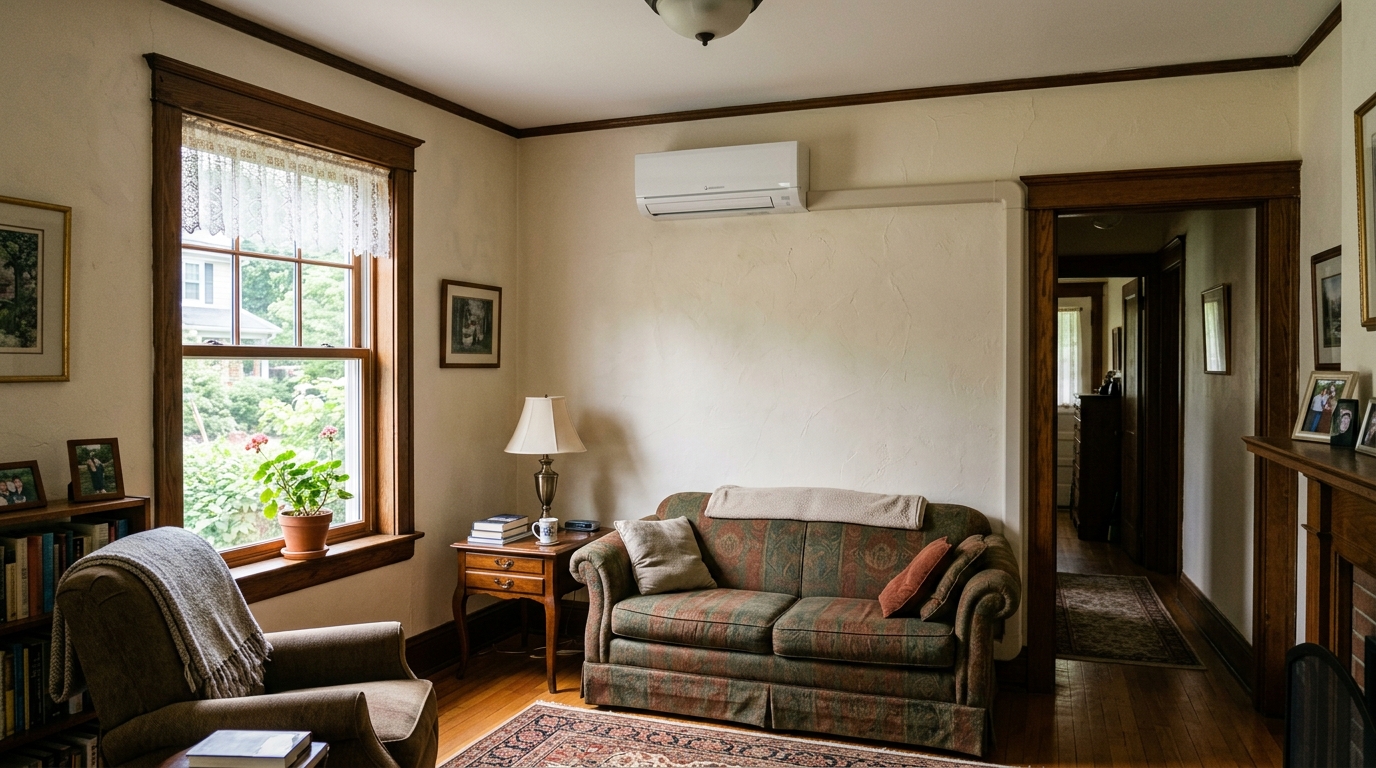
Ductless mini-splits are useful in older homes because they do not require a traditional duct system. A compact outdoor unit connects to one or more indoor air handlers through small refrigerant lines. That makes the installation less invasive than adding full central air to a house that was never designed for ducts.
This matters in Sussex County homes with plaster walls, original trim, finished basements, fieldstone foundations, or tight attic access. Instead of opening walls and ceilings to run ductwork, a ductless system can often serve the rooms that need comfort help most. It can also preserve more of the home’s character.
- Rooms that stay hot in summer or cold in winter
- Finished attics, bonus rooms, and above-garage spaces
- Additions not served well by the main HVAC system
- Homes with hydronic baseboard, radiators, or no existing ducts
- Home offices, bedrooms, and living areas that need independent control
Where Ductless Systems Work Best
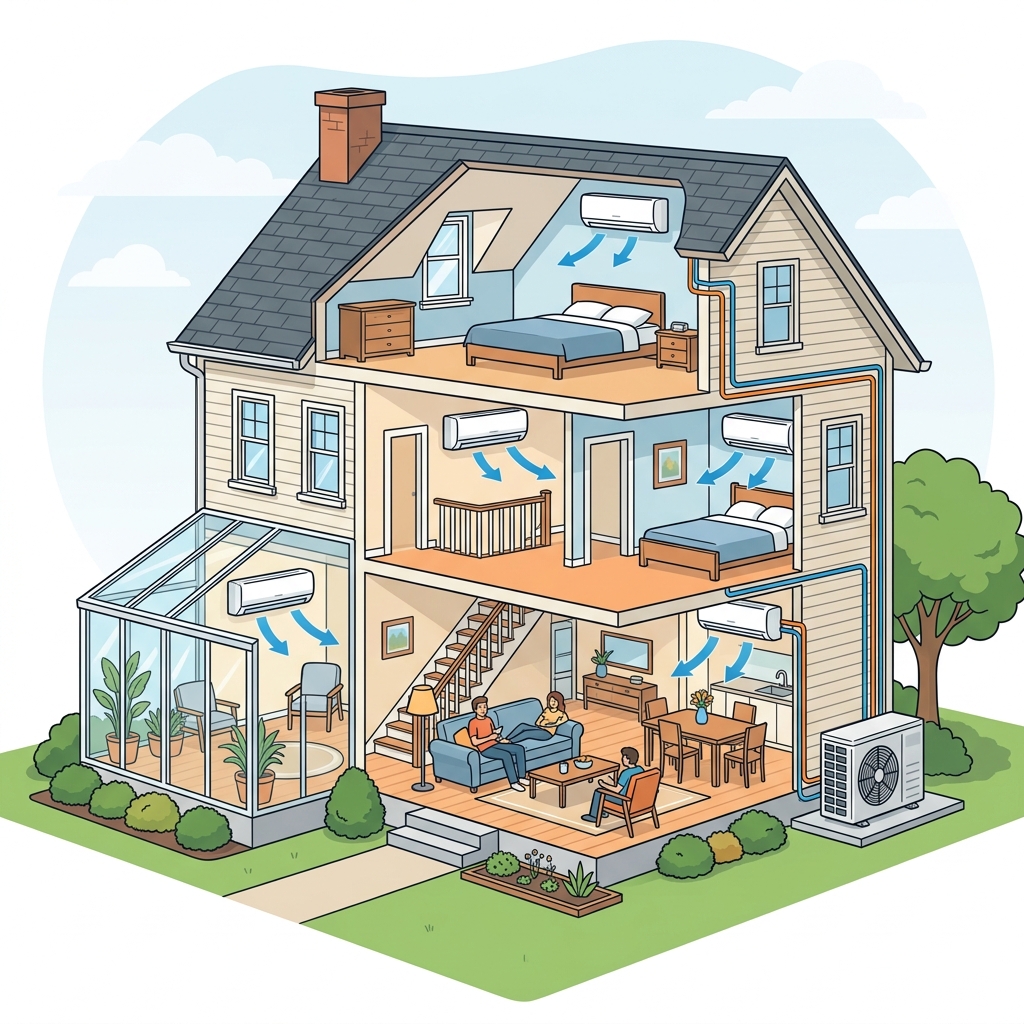
Ductless systems work best when they are used to solve a clear comfort problem. A single-zone system can handle one difficult room. A multi-zone system can serve several rooms from one outdoor unit. In many older Sussex County houses, this zone-by-zone approach is more practical than trying to make one central system serve every room equally.
For example, an upstairs bedroom may overheat because warm air rises and the roof deck gains heat in summer. A sunroom may swing from too cold to too hot because it has more glass than the rest of the home. A finished attic may have no duct access at all. In these situations, ductless equipment can deliver comfort directly where the main system struggles.
Mini-splits can also reduce the need to condition unused rooms. Instead of cooling the whole house to make one bedroom comfortable, the homeowner can set that specific zone. That is one reason many households consider ductless systems when they want comfort improvements without a full HVAC replacement.
What to Check Before Installing One
For professional AC Installation in Randolph, NJ services, contact Constant Air Service today.
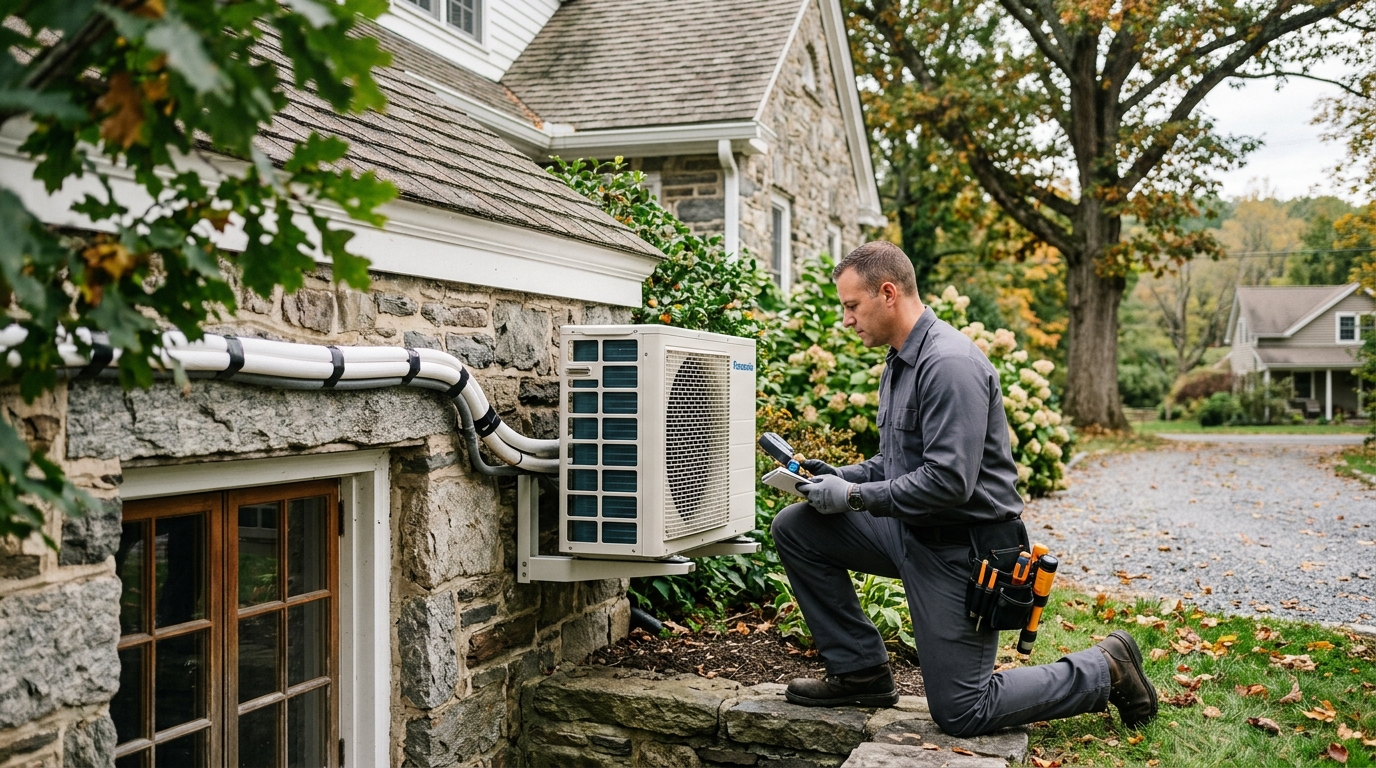
A ductless mini-split is not automatically the right answer just because a home is older. The system needs to be sized and placed correctly. Oversized equipment can short-cycle. Undersized equipment can run constantly and still miss the set temperature. A professional load calculation helps match the equipment to the room, insulation, window exposure, ceiling height, and Sussex County winter conditions.
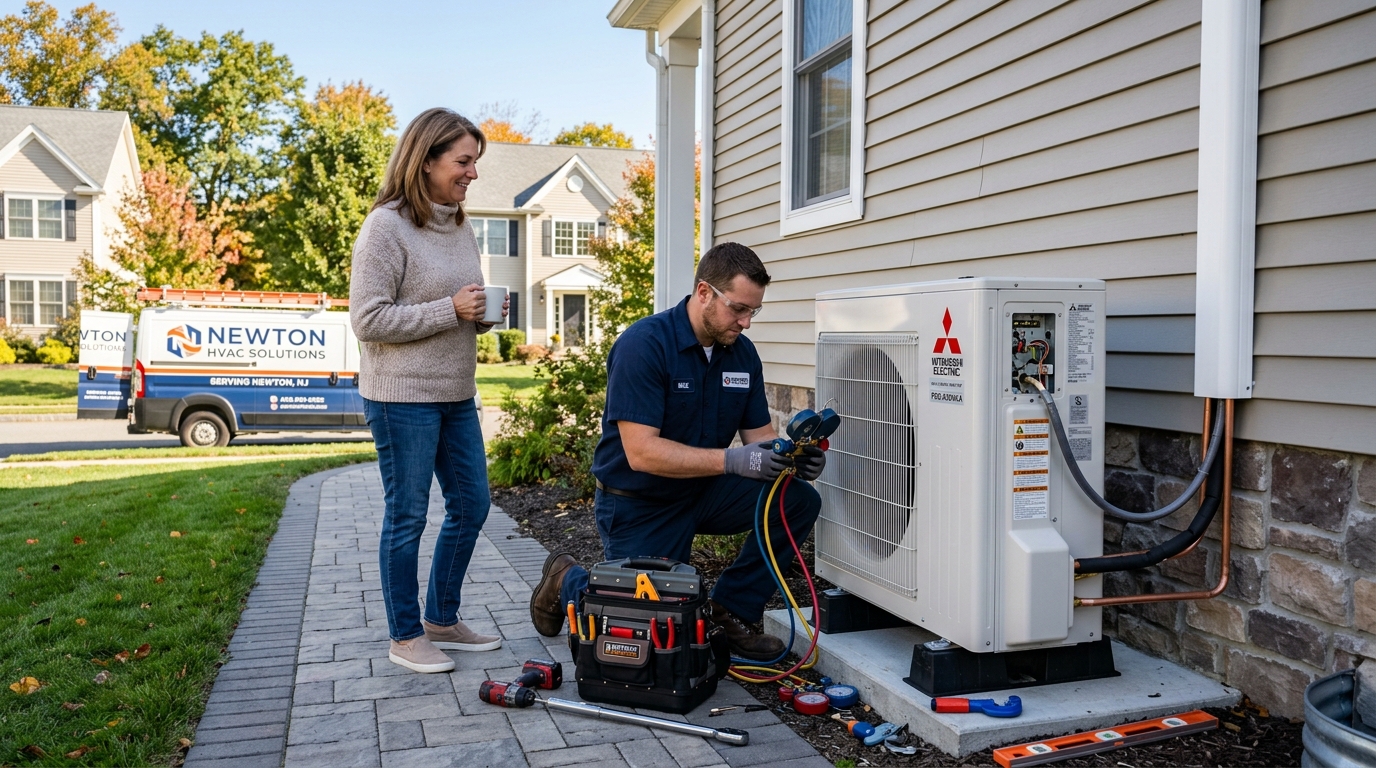
The home’s electrical panel also needs attention. Some older homes may need electrical upgrades before adding new HVAC equipment. Placement matters too. Indoor heads should be mounted where airflow can reach the occupied space, not hidden behind beams, doors, tall furniture, or room dividers. Outdoor units need service clearance and a location that can handle snow, drainage, and seasonal debris.
Homeowners should also decide how the mini-split will work with the existing heating system. In some houses, ductless heat pumps provide most day-to-day heating and cooling. In others, they supplement a furnace, boiler, or geothermal system during shoulder seasons and problem-room conditions.
How They Handle Sussex County Winters
For professional AC Making Loud Noises — What They Mean services, contact Constant Air Service today.
Modern cold-climate mini-splits can perform well in New Jersey winters when they are selected for the local load and installed correctly. The key phrase is cold-climate. Not every mini-split has the same low-temperature heating capacity, so equipment selection should reflect Sussex County’s colder nights, wind exposure, and older-home insulation levels.
In a well-matched application, a ductless heat pump can provide efficient heat without relying only on electric resistance. In a draftier or under-insulated home, the system may still improve comfort but may need backup from the existing boiler or furnace during the coldest stretches. That is not a failure. It is a design decision based on the house.
Bottom Line for Older Homes
For professional Furnace Installation in Stanhope, NJ services, contact Constant Air Service today.
Ductless mini-splits work well in many older Sussex County homes because they solve targeted comfort problems without major ductwork. They are especially useful for additions, upstairs rooms, sunrooms, finished attics, and homes with boiler or radiator heat. The deciding factors are room-by-room sizing, placement, electrical readiness, insulation, and whether the system is meant to supplement or replace existing heating and cooling.
If your older home has rooms that never feel right, Constant Air Service can evaluate the layout and recommend whether a ductless mini-split, central HVAC adjustment, or another comfort solution makes the most sense. Visit Constant Air Service’s heating and HVAC services to start with a local assessment.
Ductless Mini-Split FAQs
For professional Furnace Installation in Branchville, NJ services, contact Constant Air Service today.
Can a ductless mini-split cool an entire older home?
It can, but only if the home is designed around multiple properly sized zones. Many older homes use ductless systems for specific problem areas instead of whole-home replacement.
Are mini-splits good for homes with boiler heat?
Yes. Homes with boilers often lack ductwork, so ductless systems can add cooling and supplemental heat without converting the entire house to forced air.
Do mini-splits need maintenance?
Yes. Filters, coils, drains, refrigerant performance, and outdoor-unit clearances should be checked regularly to keep the system efficient and reliable.